THREE KEY FACTORS FOR THE 2026 PRESIDENTIAL CAMPAIGN THAT WANTS TO BE A WINNER IN COLOMBIA

Illustration by: Mohamed Hassan – Pixabay

Several names in Colombia are already candidates, and many others are quietly preparing to be presidential candidates for 2026. Reviewing the new way of communicating used by two previously labeled weak candidates, Milei and Trump, who ultimately won, from them are several lessons to be applied by those who hope to be elected president of Colombia. In this article, we talk about these keys and everything that surrounds their efficiency—vital lessons that do not require significant investments or effort but will, decision, and perseverance. 

By: ottogutierrez@ymail.com

2025 has begun, and potential presidential candidates have started preparing to organize their support, proposals, and campaign teams. Although it may seem that 15 months before the election is too early, the truth is that it is just the right amount of time for potential candidates. That is why it will be expected to see activity from many politicians, resignations of officials, and announcements from citizens who aspire to a place on the ballot.

Citizens will begin to see many faces and hear many names. However, they will see an oversupply of proposals to win the electorate’s vote. These proposals will be based on the nature and characteristics of each candidate. All will be valid in the diverse spectrum of visions of the country that we will hear in 2025 and the 2026 campaign. The struggle to position these proposals in public opinion, especially in citizens’ minds, will be the great battle that all candidates must carry out regardless of their condition or party. As in all campaigns of all times and all democracies, the key will be in the communication of the candidates with the voters. The history of campaigns is changing due to the current communication challenges posed by traditional and new media.

It is worth looking at the most recent and high-profile presidential campaigns that prove all the theories presented in this article. They are also discussed in political and academic circles and among political advisors. The campaigns are the election of Javier Milei in Argentina and Donald Trump in the United States. The electoral policy manual proposes two candidates with the worst conditions as a path to success. These conditions in Milei’s case were: lack of knowledge on the part of voters, unfavourability, ruthless political-personal attacks, lack of empathy, and lack of a political structure to campaign (party, media, support). In Trump’s case, high unfavourability, a dark past, manifest rejection, ruthless political-judicial attacks, and lack of empathy, among others. In favor, an executed government, achievements, and a great desire to reverse the bad image. The two, like David against Goliath (Viera, 2024), fought against governments in office that were ideologically opposed, promoting their candidates for continuity and with many resources to manipulate things so that they would not change, as has been discovered in each case.

Given this scenario, the questions are: What did these candidates do to win a battle that was a priori lost? How did they manage to reverse, with speeches and proposals, the deep-rooted ideology of opposing governments and their followers who despised and stigmatized them in the public eye? Finally, what did they do to succeed if they lacked all the means to grow and only had their impetus, strength, and persistence? The answer in both cases is straightforward. They changed their communication, but they changed it radically to adapt it to the reality of their times and societies. Viera sums it up (Analítica, 2024): “The media made Trump more of a media product than he was. Trump took advantage of that “wave,” resorting to language that framed his proposals as a defense against “the others.”

Milei and Trump knew how to present their proposals; they found the best moment to make each one, and they broke the molds of traditional communication regarding their speeches, statements, and opinions in terms of form and content. They innovated, trusted, persisted, and waited. They read a country from another angle; they tried, failed, corrected on the fly, and got it right. They built their communication model, taking into account their weaknesses and strengths. Daniel McCarthy describes Trump with these words: “The challenge he poses does not lie so much in what he does as in the fact that he questions the beliefs on which authority rests.”

The two winning candidates spoke so clearly that no one could ignore their words. The statements were not politically correct, commonplaces, clichés, or apparent statements. They were their feelings, vision, promise, and commitment. They prioritized all that over the pro-candidacy political compromises or compromises that significantly limit the candidates’ sincere expression. The prestigious Democratic political consultant James Carville describes it this way: “In politics, perception is everything, and many Americans see us as absent with the economy as if we do not feel their hardships or worry too much about other things.”

Milei and Trump were authentic, regardless of their past, and, like a magnet, they attracted people, politicians, voters, journalists, and commentators. One by one, they came to share a message that, it was believed, had not been heard before, neither in form, substance, time, or tone. It was the same but different, an axiom that, although evident, plays a key and profound role in communicating the candidates in Colombia for 2026.

Once we have seen that the success of the campaigns mentioned above was based on communication and after analyzing the results, the proposals, and the way they were carried out, we go straight into the subject of communication to draw lessons to be learned from the Colombian candidates who, in the 12 months remaining until the start of the next presidential election, must apply them very well. It is firmly believed that they will not be successful if they do not change traditional or old communication and do not implement what current times demand.

READ HERE: ONE-TO-ONE COMMUNICATION AND MARKETING ARE KEY IN THESE TIMES  https://bit.ly/4jclNkU

On the contrary, success will come if the candidate knows how to implement and adapt to the three variables of campaign communication that experience says had a winning effect and will have such a result in Colombia only if they are applied to the reality in which the campaign will be carried out. These axes are the following:

  1. Campaign topics are different from government topics. It means that a candidate who wants to connect with and convince voters cannot come and present topics in campaign appearances as if he were talking about his well-crafted government program. No. The campaign presents topics without the technical, complex, politically correct, ceremonial, prosopopoeic language of past elections. Today, more than ever, it must be decoded, simple, straightforward, understandable by all, complete, short, and above all, impress the listener and not leave them wondering what he said or stating that the candidate did not say anything simply because the listener did not understand. Some very conservative examples of this type of message could be that social protest is how a minority violates the rights of the majority. Subsidies make people poorer; getting educated is making a profit. Criminals are the ones who should be afraid, not honest people. Three suggestions will be put forward in the campaign journal, which will then be asked to be explained, and positions will be set on issues such as social protest, subsidies and education, security, corruption, and justice. In the Milei case, which also applies to Trump, analyst Ana Iparraguirre, from the GBAO Strategies analysis center (2023), spoke of a new style, saying: “It was a fight between the old form of communication in traditional media and billboards, with state funds, versus a more organic way of communicating through new media.”
  • Communication must be structured to be disseminated on social networks and the media. Giving one or the other the value to be predominant will depend on handling the issues in point one. The expression cannot be the same. The message cannot be the same in form, content, and timing because social networks exist. It is reason enough to change. If the messages are emotional, short, complete, simple, and easy to understand, they will be successful on the networks. They will reach more people interested in achieving them, and the reactions can be measured. Thus, many more benefits can be attributed to this means of communication that gives what traditional media do not offer. As the media continue to exist and will also be in the campaign, they must be supplied with the same issues but differently. The media proposals described before, such as social protest, subsidies, education, security, corruption, and justice, will be repeated, explained, and expanded. It must be understood that the media have their dynamics but, above all, their specific audiences. The media are not social networks. The media is used to find another scenario from which more emphasis is placed on the campaign approaches made on social networks day after day. It is about taking advantage of the communication circle to turn it in favor of the candidate and his cause. The same analyst, Ana Iparraguirre (2023), summarized it: “Milei became known as a television panelist, and clips of her interventions went to social networks, where they went viral and reached young people. Thus, she carried out her campaign on Twitter, Instagram, and TikTok and moved away from traditional formats, which also shook  the way of campaigning in the country.”
  • The candidate will have an audience of supporters and detractors (more of these). It is vital to understand its effective management. The campaign must communicate efficiently by speaking to them in the same way but differently. As the audience that listens to the candidate is mixed between those who support him and those who do not, the secret will be to generate messages that, when heard or read by both groups, cause an effect. The ideal would be for it to have the same effect, but since it is impossible, achieving the maximum in one and the least resistance in the other will already be a good achievement. Gabriel Vommaro (2023) described Milei’s work with these words: “his intense media exposure since then allowed him to establish a relationship of relative closeness with depoliticized audiences. Convinced of the power of that direct contact, the power of a “celebrity,” he chose not to invest in the construction of a political organization. Instead, he maintained control of his public image, speech, and proselytizing action.” Javier Balsa (2024), in the book Why did Milei win? He defined it thus: “A much harsher discourse predominates, which perhaps began with memes but became increasingly established, with communicators who were previously peripheral and now move towards the center of the concentrated media. Thus, this discourse became legitimized; some people adhere to it, replicate it, and choose it.” The old and famous James Carville credited Trump with a more direct expression: “Trump, for the first time in his political career, won decisively by taking over a section of middle-class voters.”

Once the three key axes of how campaign communication should be in 2026 have been raised, it is necessary to make a warning. Populists, opportunists, or candidates who distract the vote can easily make use of these resources for their purposes. It will be easy to distrust them because they will only remain in sonorous and pleasant announcements for the masses. It will be seen that they are empty proposals without the requested explanation or depth, context, and support. The 2022 presidential election already gave us a demonstration of these errors. The two finalist candidates were characterized by decisively falling into these errors. One promised dozens of unrealizable things and disappointed his voters. The other, incipiently applying the ideas raised here, gained favorability, but behind his proposals, it was seen that there was nothing. In the end, it deflated resoundingly. That election also showed that the candidates who did not make it to the final vote could have had more sensible, documented approaches and proposals focused on solving citizens’ problems. However, they failed to connect them because their communication was not aligned with what was proposed here, which will be vital in the future.

Illustration by: Mohamed Hassan – Pixabay

To put everything said into context, we only need to review Colombia’s reality regarding the technological, behavioral, and demographic environments that will make the communication proposed here possible.

Technological Environment: The technological habits of Colombians in 2023 (Digital Colombia Datareportal) show 39.3 million Internet users in Colombia, which means a penetration of 75.7%. There are 38.4 million social media users, representing 75% of the population. A total of 73.6 million active cell phone connections were made, which is equivalent to 141.8% of the population. Colombia has 36.2 million adults who use social media, meaning 93.9% of the adult population. 97.7% of Internet users use at least one social network regardless of age. By networks, the most used in Colombia are Facebook 33.5 Million, YouTube 30.7 Million, Instagram 17.7 Million, TikTok 20.1 Million, FB Messenger 20.4 Million, LinkedIn 12 Million, Snapchat 6.1 Million, X 5.1 Million.

Behavioral Environment: 97.5% of Colombians own smartphones (We Are Social/Hootsuite/Branch 2021). The time spent using the Internet is 10 hours and 7 minutes. 78% use the Internet for entertainment. 79% used it in the last month to access social networks. 80% use it daily to access Facebook. 88% say that Facebook is the most used network. People between 16 and 56 consider the Internet important (TIC, 2018).

Demographic Environment: The demographic changes in the current Colombian population and their habits regarding the use of the Internet and social networks determine audiences’ nature and how they relate to them. Today, 33.59% of the population in Colombia corresponds to digital natives, people between 15 and 35 years old. 19.48% are digitally savvy people between 35 and 49 years old. Of these two groups that favor digital information and relationships, 53.07 represent more than half of the population. Additionally, 15.17% of the so-called digital users are between 50 and 64. Finally, 5.43% are part of the basic digital users group, aged between 65 and 74. The estimated percentage of the digitally active population is 73.67%, equivalent to 35.54 million. Of these, 50.7% are women and 49.3% are men—82.2% live in urban areas and 17.8% in rural areas. The average age of the Colombian population is 31.5 years, and a fully digital native is.

A communication operation like the one proposed in this article requires a communications team familiar with the processes outlined here. The necessary digital strategies, such as one-to-one segmentation, micro-segmentation, Viralization, deepening of content, and KPI management, will make digital communication efficient. All this with a critical warning. What is proposed is within the ethical and legal framework of digital communication. Anything done outside of this framework only demonstrates the inability of the performers to obtain results by complying with the rules of the game. If somebody knows how to play the game, that person can win without cheating or unfair dealings.

Finally, it is undeniable that political communication must be different in light of the new communication realities implemented in the first quarter of this century. Today’s audiences are diverse, with various information searches and consumption habits. They give credibility to their digital sources. Some say that not so much to traditional media, which is losing ground to social media. The costs of dissemination on social media with optimization and segmentation are lower than those of the press, radio, and television. According to the Global Entertainment & Media Outlook 2023-2027, “by 2023, it was observed that digital advertising investment was 4,087 million dollars globally. This level is higher than that of television, radio, or paper combined. In recent years, advertising has taken the digital direction with greater force, even above channels such as print media or television.” Experience shows that the high volume of resources invested in digital media and the low effectiveness of that communication in some organizations confirms that it can be well-targeted but poorly executed, which must be corrected for the communication proposal for the 2026 campaigns. Finally,  the best conclusion is made by the experienced James Carville, a Democratic advisor to dozens of presidential campaigns and who appeared in the media several times saying that he was looking for the reason for Kamala Harris’ defeat. He finally found a reason and published it in an article in the New York Times in 2024, transcribed here: “It is a new media paradigm that we live in now. I am an 80-year-old man, and we are heading towards a non-traditional and decentralized media environment. Podcasts are the new print newspapers and magazines. Social platforms are a social conscience. Moreover, influencers are the digital managers of that conscience. Our economic message must be sharp, sharp, and clear; we must take it directly to the people. For Democratic presidential hopefuls, their 2028 auditions should be based on two things: 1) how authentic they are on economic issues and 2) how well they explain it on a podcast. Carville’s statement is completely in line with our analysis and our point. As things stand today, it will not be possible to have a successful campaign without considering campaign messages and government messages as different but complementary things. Knowing that should speak to social and traditional media as two parallel channels that converge on the candidate. Supporters and detractors demand similar but different messages that must be effective in both audiences. We can end with the phrase from Kelly & Littman (2010) in their book The Ten Faces of Innovation, which applies perfectly to a presidential election year. “There is no guarantee that what worked yesterday will work tomorrow.” For a candidate to be able to communicate efficiently, they must create their own communications environment. Here are the strategic axes. When those interested are thinking about organizing their campaigns while defining proposals and teams, they must manage the communication that, as demonstrated, will make the connection and majority vote of the electorate possible.

TRES FACTORES CLAVE PARA LA CAMPAÑA PRESIDENCIAL DE 2026 QUE QUIERA SER GANADORA EN COLOMBIA

Ilustración de: Mohamed Hassan-Pixabay

En Colombia ya suenan varios nombres y otros tantos en silencio se preparan para ser candidatos presidenciales para 2026. Revisando la nueva forma de comunicarse que utilizaron dos candidaturas anticipadamente desahuciadas como fueron las de Milei y Trump, al final ganadores quedan varias enseñanzas para ser aplicadas por quien espera ser elegido como presidente de Colombia. En este artículo hablamos de esas claves y de todo lo que rodeó su eficiencia . Vitales lecciones que no requieren grandes inversiones o esfuerzo sino voluntad, decisión y constancia. 

Por: ottogutierrez@ymail.com

Comenzó el 2025 y los posibles candidatos presidenciales  iniciaron los preparativos para organizar sus apoyos, propuestas y equipos de campaña. Aunque pareciera que 15 meses antes de la elección es temprano, la verdad es que es el tiempo justo para los posibles candidatos. Por eso será normal ver actividad de muchos políticos, renuncias de funcionarios y anuncios de ciudadanos que aspirarán a un lugar en el tarjetón.

Los ciudadanos empezarán a ver muchas caras y oír muchos nombres pero por encima de todo verán una sobre oferta de propuestas hechas para ganar el voto del electorado. Esas propuestas estarán de acuerdo con la naturaleza y características de cada candidato. Todas serán válidas en el diverso espectro de visiones de país que oiremos en este 2025 y en la campaña del 2026. La lucha por posicionar esas propuestas en la opinión pública, y en especial, en la mente de los ciudadanos será la gran batalla que deben ejecutar todos los candidatos sin importar su condición o partido. Como en todas las campañas de todos los tiempos y de todas las democracias la clave estará en la comunicación de los candidatos con los electores. La historia de las campañas está cambiando por el reto de comunicación que plantean los medios tradicionales y nuevos medios en los tiempos actuales.

Vale la pena dar un vistazo a las más recientes y sonadas campañas presidenciales que parecieran probar toda la teoría que se planteará en este artículo y las que se comentan en los círculos políticos, académicos y entre los asesores políticos. Son el caso de la elección de Javier Milei en Argentina y Donald Trump en los Estados Unidos. Dos candidatos con las peores condiciones que el manual de política electoral plantea como vía al éxito. Esas condiciones en el caso de Milei eran: bajo conocimiento por parte de los votantes, desfavorabilidad, despiadados ataques político-personales, falta de empatía y carencia de una estructura política para hacer campaña, (partido, medios, apoyos, etc.).  En el caso de Trump, alta desfavorabilidad, oscuro pasado, rechazo manifiesto, despiadados ataques político-judiciales, cuestionado carisma, entre otros. A favor, un gobierno ejecutado, logros y mucho deseo de revertir la mala imagen. Los dos como David frente a Goliat (Viera, 2024) luchaban contra gobiernos en ejercicio absolutamente opuestos ideológicamente, impulsando candidatos propios de continuismo y con muchos recursos para manipular cosas para que no cambiaran como se ha venido descubriendo en cada caso.

Ante ese panorama las preguntas son: ¿qué hicieron esos candidatos para ganar una batalla que a priori era perdida? ¿Cómo lograron revertir con discursos y propuestas la enraizada ideología de gobiernos opuestos y sus adeptos que los despreciaban y estigmatizaban ante la opinión pública? Por último, ¿qué hicieron para tener éxito si carecían de todos los medios para triunfar y solo tenían su ímpetu, fuerza y persistencia? La respuesta en los dos casos es simple y clara. Cambiaron su comunicación, pero la cambiaron radicalmente para adaptarla a la realidad de sus momentos y sociedades. Así lo resume Viera (Analítica 2024): “los medios hicieron de Trump, un producto mediático más de lo que era. Trump aprovechó esa “ola”, recurriendo a un lenguaje que enmarcó sus propuestas como la defensa contra “los otros””

Milei y Trump supieron plantear sus propuestas, encontraron el mejor momento para hacer cada una, rompieron los moldes de la comunicación tradicional en sus discursos, declaraciones y opiniones en cuanto a la forma y fondo. Innovaron, confiaron, persistieron y esperaron. Leyeron un país desde otro ángulo, probaron, fallaron, corrigieron sobre la marcha y acertaron. Construyeron su propio modelo de comunicación teniendo en cuenta sus debilidades y sus fortalezas. A Trump lo describe Daniel McCarthy con estas palabras: el desafío que plantea no reside tanto en lo que hace como en el hecho de que pone en tela de juicio las creencias sobre las que descansa la autoridad”.

Los dos candidatos ganadores hablaron tan claro que nadie podía ignorar lo que decían. Los anuncios no eran políticamente correctos, ni lugares comunes, ni clichés u obviedades. Eran su sentir, su visión, su promesa y su compromiso. Priorizaron todo eso a las componendas o compromisos políticos pro-candidatura que limitan mucho la expresión sincera de los candidatos. El prestigioso asesor político demócrata, James Caville, lo describe así: “En política, la percepción lo es todo y muchos estadounidenses nos ven como ausentes con la economía, como si no sintiéramos sus penurias o nos preocupáramos demasiado por otras cosas”.

Milei y Trump se mostraron auténticos y sin importar el pasado. Eso como un imán, atrajo la gente, políticos, electores, periodistas, comentaristas. Uno a uno fueron llegando a compartir un mensaje, que se creía, no se había oído antes ni en forma, ni fondo, ni tiempo, ni tono. Era lo mismo pero diferente, un axioma que aunque obvio jugará un papel clave y profundo en lo que debe ser la comunicación de los candidatos en Colombia para 2026.

Una vez visto que el éxito de las campañas mencionadas radicó en la comunicación y luego de analizar los resultados , las propuestas y la forma como se hicieron se entra de lleno y directamente al tema de la comunicación para sacar las lecciones para ser aprendidas por los candidatos colombianos quienes en los 12 meses que quedan para el inicio de la siguiente elección presidencial deberán aplicarlas muy bien. Creo firmemente y es mi opinión que si no se cambia la comunicación tradicional o antigua y no se implementa la que los tiempos actuales demandan, es muy difícil tener éxito.

LEA AQUI: COMUNICACION Y MERCADEO UNO A UNO SON LA CLAVE EN ESTOS TIEMPOS https://bit.ly/2MbvOUc

Por el contrario el éxito llegará, sí el candidato sabe implementar y acomodarse a las tres variables de la comunicación de campaña que la experiencia dice que tuvieron efecto ganador y lo tendrán en Colombia sí se aplican sobre la realidad en la que se ejecutará la campaña. Esos ejes son las siguientes:

1. Unos son los temas de campaña y otros son los temas de gobierno. Saber alternar esta variable es la primera gran clave para 2026. Esto quiere decir que un candidato que quiera conectarse y convencer electores no puede venir a plantear en las apariciones de campaña temas como si estuviera hablando de su bien empastado programa de gobierno. No. En la campaña se plantean los temas sin el lenguaje técnico, complejo, políticamente correcto, ceremonioso, prosopopéyico de elecciones pasadas. Hoy más que nunca debe ser descodificado, sencillo, claro, comprensible por todos, completo, corto y sobre todo que impresione al oyente y que no lo deje preguntándose ¿qué dijo? o afirmando que el candidato no dijo nada, simplemente porque el oyente no entendió. Algunos ejemplos muy conservadores del tipo de mensajes podrían ser: La protesta social es la forma como una minoría viola los derechos de la mayoría. Los subsidios hacen a la gente más pobre, educarse es tener ganancias. Los delincuentes son los que deben tener miedo no la gente honrada. Tres sugerencias para plantear en el diario de la campaña que luego pedirán que se expliquen y se fijarán posiciones sobre temas como la protesta social, los subsidios y la educación y por último la seguridad, la corrupción y la justicia. En el caso Milei que también aplica a Trump, la analista Ana Iparraguirre, del centro de análisis GBAO Strategies. (2023) hablaba de un nuevo estilo diciendo: “Fue una lucha entre la antigua forma de comunicación en medios tradicionales y vallas publicitarias, con fondos estatales, frente a una forma más orgánica de comunicarse a través de nuevos medios”.

2. La comunicación debe estructurarse para ser difundida en redes sociales y medios de comunicación.  Darle a uno o a otro el valor para ser predominante dependerá del manejo de los temas del punto uno. La expresión no pueden ser igual. El mensaje no puede ser el mismo de antes en forma, fondo y tiempos porque existen las redes sociales. Esta razón suficiente para cambiar. Si los mensajes son emocionales, cortos, completos, sencillos y de fácil comprensión tendrán éxito en las redes. Llegarán a más gente, a la que interesa alcanzar, se podrán medir las reacciones y así muchos beneficios más como atributos de las redes que no brindan los medios tradicionales. Como los medios siguen existiendo y estarán también en la campaña deberán ser abastecidos con los mismos temas pero de forma diferente. Volviendo a los ejemplos del punto uno en medios se repetirán, explicarán y ampliarán propuestas como la protesta social; los subsidios y la educación;  por último la seguridad, la corrupción y la justicia. Se debe comprender que los medios tienen sus propias dinámicas pero sobre todo sus audiencias específicas. Los medios no son las redes sociales. Se llega a los medios de comunicación para hallar otro escenario desde donde se hace énfasis en los planteamientos de campaña hechos en redes día día. Es aprovechar el círculo comunicativo para tornarlo a favor del candidato y su causa. La misma analista Ana Iparraguirre, (2023) lo resumía así: “Milei se dio a conocer como panelista televisivo y clips de sus intervenciones iban a dar a las redes sociales, donde se viralizó y alcanzó a los jóvenes. Así, llevó a cabo su campaña en Twitter, Instagram y Tiktok y se alejó de los formatos tradicionales, lo cual sacudió también la manera de hacer campaña en el país”.

3. El candidato tendrá una audiencia compuesta por seguidores y detractores, (más de estos). Suena obvio pero es vital comprender su manejo efectivo. La campaña deberá comunicarse eficientemente bajo la premisa de hablarles  igual pero de forma diferente. Como la audiencia que escucha al candidato está mezclada entre los que lo apoyan y los que no, el secreto será generar mensajes que al ser oídos o leídos por los dos grupos causen un efecto. El ideal sería que fuera el mismo efecto pero como no es posible; con  que logre el máximo en uno y la menor resistencia en el otro ya será un buen logro. Gabriel Vommaro (2023) describió el trabajo de Milei con estas palabras: “su intensa exposición mediática desde entonces, le permitió establecer una relación de relativa cercanía con públicos despolitizados. Convencido del poder de ese contacto directo, el poder de una “celebridad”, eligió no invertir en la construcción de una organización política. En cambio, mantuvo el control de su imagen pública, de su discurso y de su acción proselitista”. Javier Balsa (2024) en el libro ¿por qué gano Milei? lo definió así: “Predomina un discurso mucho más duro, que quizás empezó con memes pero que cada vez se fue instalando más, con comunicadores que antes eran periféricos y que ahora se mueven hacia el centro de los medios de comunicación concentrados. Así ese discurso se fue legitimando; hay gente que adhiere, lo replica y lo elige”. El viejo y afamado James Carville dio crédito a Trump con una expresión más sencilla y directa: “Trump, por primera vez en su carrera política, ganó decisivamente al apoderarse de una franja de votantes de clase media”.

Una vez planteados los tres ejes clave de cómo debería ser la comunicación de las campañas en 2026 es necesario hacer una advertencia. Los populistas, los oportunistas o candidatos distractores del voto pueden hacer fácil uso de estos recursos para sus propósitos. De ellos será fácil desconfiar porque se quedarán solo en anuncios sonoros y agradables para el oído de las masas. Se verá que son propuestas vacías, sin  la explicación o profundización que se pide, sin contexto y sin respaldo. La elección presidencial de 2022 ya nos dio una demostración de esos errores. Los dos candidatos finalistas se caracterizaron por caer decididamente en estos errores. Uno prometió decenas de cosas irrealizables y defraudó a sus votantes. El otro aplicando incipientemente las ideas que aquí se plantean ganó favorabilidad pero detrás de sus propuestas se vio que no había nada. Al final se desinfló estruendosamente. Esa elección también nos permitió ver que  los candidatos que no llegaron a la votación final pudieron haber tenido planteamientos más sensatos, documentados y propuestas más enfocadas en solucionar problemas de los ciudadanos pero no lograron conectarlas porque su comunicación no estuvo alineada a lo que aquí se plantea y que será vital en el futuro.

Ilustración de: Mohamed Hassan-Pixabay

Para poner todo lo dicho en contexto solo hay que revisar la realidad digital colombiana frente a los entornos, tecnológico, conductual y demográfico que harán posible que la comunicación que aquí se plantea sea posible.

Entorno Tecnológico: los hábitos tecnológicos de los colombianos  en 2023 (Digital Colombia Datareportal) muestran que en Colombia hay 39,3 Mill de usuarios de Internet lo que significa una penetración del 75,7%.  Existen 38,4 Mill de usuarios de redes sociales, lo que representa el 75% de la población. Un total de 73, 6 Mill de conexiones activas de celular se realizaron lo cual equivale 141,8% de la población. Colombia tiene 36,2 Mill de personas mayores de edad usuarios de redes sociales, lo que significa que el 93,9% del total de la población mayor de edad. El 97,7% de los usuarios de internet ,sin importar la edad, usan al menos una red social. Por redes las más usadas en Colombia son: Facebook 33,5 Mill, YouTube 30,7 Mill, Instagram 17,7 Mill, TikTok 20,1 Mill, FB Messenger 20,4 Mill, LinkedIn 12 Mill, Snapchat 6,1 Mill, X 5,1 Mill.

Entorno Conductual:  El 97,5% de los colombianos posee un teléfono inteligente (We Are Social/Hootsuite/Branch 2021). El tiempo invertido en el uso de internet es de 10 horas 7 minutos. El 78% usa el internet para entretenimiento. El 79% lo utilizó en el último mes para ingresar a Redes Sociales. El 80% lo usa al día para entrar a Facebook. 88% dice que FB es la red más usada. Las personas entre 16-56 años califican el internet como “muy importante” (TIC, 2018).

Entorno Demográfico: los cambios demográficos en la actual población colombiana  y sus hábitos frente al uso de internet y redes sociales determinan claramente la naturaleza de las audiencias y la forma de relacionarse con ellas. Hoy en día en Colombia, el 33,59% corresponde a digitales nativos, personas entre 15 y 35 años. El 19,48% son digitales aprendidos personas entre 35 y 49 años. Entre estos dos grupos altamente partidarios de la información y relacionamiento digital tenemos el 53,07% lo que representa más de la mitad de la población. Adicionalmente, el 15,17% son los llamados usuarios digitales, personas entre 50 y 64 años. Finalmente, el 5,43% hacen parte del grupo básicos digitales usuarios entre 65 y 74 años. El porcentaje estimado de la población digitalmente activa es de 73,67% que equivale a 35,54 Mill. De estos 50,7 % son mujeres y 49,3% hombres. El 82,2% vive en zonas urbanas y 17,8 en áreas rurales. La edad media de la población colombiana es de 31,5 años un digital nativo pleno.

Para empezar a concluir  hay que decir que una operación de comunicación como la que se plantea en este artículo requiere de un equipo de comunicaciones conocedor de los procesos que aquí se esbozan. Las estrategias digitales necesarias como segmentación uno a uno, microsegmentación, viralización, profundización de contenidos, manejo de KPI entre otros, permitirán que la comunicación digital sea eficiente. Todo esto con una advertencia muy importante. Lo que se plantea está dentro del marco ético y legal de la comunicación digital. Todo lo que se haga fuera de ese marco solo demuestra la incapacidad de los ejecutantes de obtener resultados cumpliendo las reglas del juego. Si se sabe jugar el juego se puede ganar sin trampa ni componendas desleales.

Finalmente, Es innegable que de la mano de las nuevas realidades de comunicación que se ejecutan en el primer cuarto de este siglo, la comunicación política debe ser diferente. Las audiencias hoy son disímiles, tienen hábitos de búsqueda y consumo de información distintos. Dan credibilidad a sus propias fuentes digitales. Alguien diría que ya no tanto a los medios tradicionales que pierden terreno frente a las redes sociales. Los costos de difusión en las redes sociales con la optimización y segmentación son más bajos que la prensa la radio y la televisión. Según Global Entertainment & Media Outlook 2023-2027 “al corte del 2023 se observó que la inversión publicitaria digital fue de 4,087 millones de dólares a nivel global. Este nivel es mayor al de la televisión, radio o papel en conjunto. La publicidad ha tomado la dirección digital con mayor fuerza en los últimos años, incluso por encima de canales como los medios escritos o la televisión”. La experiencia demuestra que el alto volumen de recursos invertidos en medios digitales y la poca efectividad de esa comunicación, en muchas organizaciones, ratifica el hecho de que puede estar bien orientada pero mal ejecutada, lo cual debe ser corregido para la propuesta de comunicación de las campañas de 2026. Por último creo que la mejor conclusión la hace el experimentado James Carville, asesor demócrata de decenas de campañas presidenciales y quien desde noviembre apareció varias veces en medios diciendo que buscaba la razón de la derrota Kamala Harris. Al fin encontró una razón y la publicó en un artículo en el New York Times en 2024 la cual trascribo aquí: “Es un nuevo paradigma mediático en el que vivimos ahora. Soy un hombre de 80 años y puedo ver claramente que nos dirigimos hacia un entorno mediático no tradicional y descentralizado. Los pódcast son los nuevos periódicos y revistas impresos. Las plataformas sociales son una conciencia social. Y los influentes son los administradores digitales de esa conciencia. Nuestro mensaje económico debe ser agudo, nítido y claro, y debemos llevarlo directamente a la gente. A los aspirantes demócratas a la presidencia, sus audiciones para 2028 deberían basarse en dos cosas: 1) lo auténticos que sean en materia económica y 2) lo bien que lo expliquen en un pódcast”. La declaración de Carville se alinea completamente con nuestro análisis y nuestro punto. Como están las cosas hoy no será posible tener una campaña exitosa sin considerar los mensajes de campaña y los mensajes de gobierno como dos cosas distintas pero complementarias. Saber qué se debe hablar a redes sociales y a medios tradicionales como dos canales paralelos que convergen en el candidato. Que los seguidores y detractores reclaman  mensajes similares pero distintos que deben generar en efecto en ambas audiencias. Termino con la frase de Kelly & Littman (2010) en su libro Las diez caras de la innovación la cual aplica perfectamente a un año de la elección presidencial. “No existe ninguna garantía de que lo que funcionó ayer lo haga también mañana”. Para que un candidato se pueda comunicar eficientemente hay que crear su propio entorno de comunicaciones. Aquí están los ejes estratégicos y cuando los interesados están pensando en organizar sus campañas, mientras definen propuestas y equipos, deben organizar la comunicación que como se demostró hará posible la conexión y el voto mayoritario del electorado.

EFFECTIVE CUSTOMER SERVICE IS A GOOD COMMUNICATION AND RELATIONSHIP WITH CUSTOMERS THAT CAN PROVIDE BASIC JUSTICE TO A SOCIETY

Customer service has become a powerful weapon that organizations offering products or services have to strengthen their relationships with customers. Unfortunately, it is a powerful weapon that does not explode. They prefer to invest more in advertising for new clients than to deepen and retain those who have already decided to be and who will be more likely to bring in new clients. Customer service is for all small, medium, or large companies. Opening the service is very important for marketing. In this article, the simple guide for an efficient service must be to reach customers as their right.

Loyalty and deepening customers, as well as exceeding their expectations, are goals that many companies need help to achieve or consolidate. Many want to achieve it without communication or interaction with customers or their prospects. Photo by:Charanjeet Dhiman- Unsplash

By: Otto Gutierrez (4ottog@gmail.com)

Good customer service in your company could bring you the achievements you from other areas of your business have yet to achieve. A Bain & Company study shows companies can grow revenue 4-8% above their market by prioritizing better customer service experiences. According to HubSpot data, 93% of customers will likely make repeat purchases with excellent customer service companies. Microsoft, from Microsoft Dynamics 365, presented a report revealing data on the new consumption dynamics and the treatment customers expect from companies. For example, 58% of American consumers will change companies due to poor customer service. Loyalty and deepening customers, as well as exceeding their expectations, are goals that many companies need help to achieve or consolidate. Many want to achieve it without communication or interaction with customers or their prospects. There could be an error, and the solution is simple, although not easy. To open customer service and start the path of making them faithful and effective. Here is a valuable guide to begin or improve your organization’s customer service.

Always showing kindness to customers will be the gateway to a fluid and constructive relationship between the organization and customers. Also, friendly and respectful treatment leads to an efficient interaction that customers will continue to repeat whenever they need to or want to do so. This customer service guide provides the strategic, operational, and tactical elements for having a friendly and positive relationship.

OBJECTIVE

As the goal of all consumer interactions with the organization, the purpose of this instruction will be to help exceed or meet consumer expectations in the first place. We also have a tool that guarantees that the organization has the opportunity to build loyalty and deepen relationships with consumers.

STRATEGIC ACTIONS

Not only words communicate. Four strategic actions will be the criteria that generally prevail in relationships and customer service sessions regardless of the moment or situation that calls them. As strategic criteria, they should be shown at all times, either with verbal or non-verbal language.

1. Always treat the person (consumer) with respect. He is a human being to whom we speak.

2. Show the ability to solve or benefit the consumer or improve his situation, any requirement, question, or suggestion of the consumer.

3. Constructively sympathize with any horrible consumer experience.

4. Demonstrate the organization’s efficiency in the deal and action developed for the consumer.

OPERATIONAL GUIDES

To meet the objective, you must consider not only the strategic actions. Operationally you must give the treatment you would like to receive if you were consumers of the organization. But it would help if you allowed the interaction with the consumer to be done within a positive framework of eight operational guidelines that ensure that the attention is always holistic.

1. Always greet the consumer and make him feel valuable. Impossible and unforgivable to start a conversation without saying hello.

2. Always be clear about what the consumer wants and needs. There is a difference between those two expectations. Unknowing that they exist will complicate dealings with the consumer.

3. Always listen to the consumer and keep quiet to speak at the right time. Nothing is more powerful for a person to find someone willing to listen to him and then tell him something valuable to his expectation.

4. Always appeal to wants and not needs. Suppose you listen to what the consumer wants to tell you. In that case, you will have the best and most valuable information to tell him how the product, service, or organization can improve his expectations.

5. Always knows the organization’s product, service, and mission well. Ignoring any of these creates disbelief and breaks any communication with the consumer.

6. Honesty and transparency are always forceful. After respect, a consumer expects to trust and establish a sincere relationship to ensure he is treated with honesty and transparency.

7. Always make him feel that the consumer is right. Think that you are in front of the consumer because he has already bought a product or service, which makes it valuable. Also, customers can buy a product or service with which they will become a different person for the organization.

8. Always think that kindness and gratitude are the first things the consumer takes away and will remember when finishing a conversation with you. Nothing is more powerful than saying please, and thank you. I’m here to help you, don’t worry, I know how to help you; I’m sorry, have a nice day.

READ HERE: THE QUESTION, DO YOU NOT KNOW WHO I AM? MUST IMPOSE IN LATIN AMERICA. https://bit.ly/3JfGix7

TACTICAL PHASES IN DEALING WITH THE CONSUMER

At this point, you knew the whole concept of how you should treat your consumers in general terms without specifying moments, situations, or events. The strategic and the operational must always be when dealing with a consumer. They are the inevitable and immovable guides to exceed or satisfy the needs or expectations of consumers.

From this point, you will discuss the tactical actions you must develop in a five-phase scheme regulating an interaction or dealing with your consumers. It would be best to remember that all five phases will occur. One may be longer or more intense than the others. One can become especially critical in your relationship. They will all occur with greater or lesser deployment, but they are all vital. For this reason, it is crucial to understand them and prepare emotionally and intellectually to face them successfully.

PHASE 1, INTRODUCTION

Whether it’s a customer service call or a conversation with a salesperson doesn’t matter. You discuss when the consumer and the organization’s agent take their roles. They confirm their interaction. They are determined to be part and counterpart for the immediate benefit of the consumer and the organization’s long term.

The following actions are essential at this stage.

• Say hi

• Introduce yourself in the most precise and briefest way

• Declare the intention to help the consumer

• Give him time to introduce himself

• If he doesn’t, ask him to do it. Expressions like who will I have the pleasure of helping today? They are very well received.

• Promptly comply with the customer service verification protocols or, if it is personal, declare that they have the information or willingness to help you.

PHASE 2, KNOWLEDGE

Once consumers and representatives have established identities and purposes, the stage begins with the consumer being heard.

• Reiterate that you are here to help him and are attentive to listen to offer him the best service.

• Ask him to explain the purpose of the interaction.

• Ask questions only when you need to clarify something unclear to you.

• Let him explain his wishes and ask about them.

• Take him to tell you his needs

• Don’t interrupt when he talks to you

• Do not start a polemic or debate

• Do not underestimate what you hear

• Do not question, criticize or give opinions about what you hear.

• End this segment with a summary of what you have heard. It is essential to be on the same page and for the consumer to see that you have paid attention. Your attention will make the consumer feel very important and will be the beginning of the next phase.

PHASE 3, RESPONSE

The time for a consumer to express expectations has ended, and the time to achieve a good reputation for the organization has begun. Build positioning. Disseminate the mission of the organization. Show leadership. Win solidarity. These five values are only given to an organization by consumers and are obtained in an instance like this.

• Reiterate that you will certainly help him and will be able to meet his expectations.

• Be respectful and kind to the consumer’s time. If you must take time for something, ensure the consumer understands it and can wait the best way.

• Be clear on the steps to respond to the requirements.

• Constantly tell the customer you are working alone or with others towards a satisfactory solution. You already know what the customer wants and needs. Say it clearly.

• Verbalize the achievements that you are obtaining if the process requires time.

• If you accomplish something of several things, show it as part of a list you are already achieving.

• If you need time for something to happen, take the opportunity to find out if the consumer may need something from other topics. You can help him with other issues once you have identified the type of consumer, his desires, and his needs.

• If the solution process is finished, announce the result and say the consumer is the winner. Customer satisfaction prepares the step to the next phase.

PHASE 4, SOLUTION

It is the moment desired by the two parties that began phase one committed to a respectful, honest, and transparent dealing. The organization’s representative has been effective, and the client must understand it clearly.

• Start this segment with a summary of what you have accomplished. The consumer must see that you have fulfilled your commitment and the consumer’s requirement has been fully satisfied. It will make the consumer feel important and strengthen the organization’s image. Remember that this is built one by one with each consumer.

• Allow the consumer to express satisfaction with the treatment and results obtained. Ask for the degree of satisfaction.

• If it has taken a relatively long time, apologize but say it was necessary to achieve the best for the consumer and their satisfaction.

• End by stating that it has been very satisfying for the organization to have you as a satisfied consumer. That you can always count on a similar service in future requirements. Now you will make transit smoothly to the last phase.

PHASE 5, CLOSURE

In the same way that there was a beginning, there is an end to the interaction. Here what was obtained in the previous phase must be highlighted, and compliance with the protocols for measuring the care received.

• Remind the consumer who was the representative of the company that helped him

• Explain and clarify the measurement protocols of the service received (if they exist or apply)

• Ask if the consumer is satisfied

• Preach that it will always be nice to help the consumer to be satisfied

• Say goodbye and wish the person a good rest of the day.

The organization must measure the experience or customer service through the KPIs, defined as the metric used to measure the level of performance of a process, function, or service. The measure focuses on different variables related to a customer service team’s performance, which implies using different KPIs for each variable. Also, measure the performance of an entire customer service team and evaluate each agent’s performance separately.

Most models with minor differences propose the following KPIs within the service evaluation. Individual employee performance, Average waiting time (TME), Requests received indicator, Conversion rate, First contact resolution indicator, Average resolution time, Customer retention rate (TRC), Average abandonment rate, Rate customer satisfaction, and finally, Net Promoter Score (NPS) which is the probability that a customer recommends you to other people.

An XM Institute report published in August 2020 shows that almost 80% of consumers will forgive a bad experience with a product or service if they find the service team “very good.” This revelation warns that the importance of customer service goes beyond simple customer contact. It shows how customer service in a commercial society understands how many people with needs for well-being and satisfaction with products and services find customer service a great escape from their frustrations. Customer services are the first source of justice in a society where individuals want to be treated adequately by organizations, with which their days will be better, either because of the quality of the products or services they receive or because of quality fails. There will be someone to listen and help, and that amnesties everything. To learn more about communication or marketing issues in your organization, write to me at 4ottog@gmail.com and tell me about your project or need. Surely I can help you.

EL SERVICIO AL CLIENTE, COMUNICARSE BIEN CON ELLOS PUEDE LLEGAR A SER JUSTICIA BÁSICA EN UNA SOCIEDAD

El servicio al cliente se ha convertido en una poderosa arma que tienen las organizaciones oferentes de productos o servicios para fortalecer sus relaciones con los clientes. Lamentablemente es una poderosa arma que no explotan. Prefieren invertir más en publicidad para nuevos clientes que profundizar y fidelizar a los que ya decidieron serlo y quienes estarán mas propensos a traer nuevos clientes. El servicio al cliente es para todos pequeñas, medianas o grandes empresas. Abrir el servicio es muy importante para el mercadeo. En este artículo están las guías simples para un servicio eficiente que debe darse ,como un derecho, al cliente existente o por llegar.

Fidelizar y profundizar a los clientes así como exceder sus expectativas son metas que muchas empresas batallan para lograr o consolidar. Una gran mayoría lo quiere lograr sin una comunicación o interacción con los clientes o sus prospectos. Photo by:Charanjeet Dhiman- Unsplash

Por: Otto Gutierrez (4ottog@gmail.com)

Un buen servicio al cliente en su empresa podría traerle los logros que usted desde otras áreas de su negocio aún no ha conseguido. Un estudio de Bain & Company muestra que las empresas pueden aumentar sus ingresos entre un 4% y un 8% por encima de su mercado cuando priorizan mejores experiencias de servicio al cliente. Según datos de HubSpot, es probable que el 93% de los clientes repitan sus compras con empresas que ofrecen un excelente servicio al cliente. Desde Microsoft Dynamics 365, se presentó un informe con reveladores datos sobre las nuevas dinámicas de consumo y el trato que los clientes esperan de las empresas. Por ejemplo, se  indica que el 58% de los consumidores estadounidenses cambiarán de empresa debido a un mal servicio al cliente. Fidelizar y profundizar a los clientes así como exceder sus expectativas son metas que muchas empresas batallan para lograr o consolidar. Una gran mayoría lo quiere obtener sin una comunicación o interacción con los clientes o sus prospectos. Ahí podría estar el error y la solución es simple aunque no sencilla. Abrir el servicio al cliente y comenzar el camino de hacerlos fieles y efectivos. Aquí una guía útil para empezar o mejorar el servicio al cliente de su organización.

Siempre mostrar amabilidad con los clientes será la puerta de entrada a una relación fluida y constructiva de la organización con los clientes. También el trato amable y respetuoso desemboca en una interacción eficiente que los clientes querrán repetir cada vez que necesiten hacerlo o quieran hacerlo. Este instructivo para la atención de los clientes proporciona los elementos estratégicos, operativos y tácticos para tener una relación amable y positiva.

OBJETIVO

Como objetivo de todas las interacciones de los consumidores con la organización el propósito de este instructivo será ayudar a exceder o satisfacer las expectativas de los consumidores en primer lugar. También tener una herramienta que garantice que la organización tiene la oportunidad para fidelizar y profundizar las relaciones con los consumidores.

ACCIONES ESTRATEGICAS

Las cuatro acciones estratégicas serán los criterios que en general deben prevalecer en las relaciones y sesiones de atención de los consumidores sin importar el momento o situación que los enfrente. Como criterios estratégicos deben mostrarse en todo momento bien sea con el lenguaje verbal como en el no verbal. No solo las palabras comunican.

1. Siempre tratar a la persona (consumidor) con respeto. Es un ser humano a quien hablamos.

2. Mostar la capacidad de solucionar con beneficio para el consumidor o mejora de su situación, cualquier requerimiento, pregunta o sugerencia del consumidor.

3. Solidarizarse constructivamente con cualquier mala experiencia del consumidor.

4. Demostrar eficiencia de la organización en el trato y la acción a desarrollar para el consumidor.

GUÍAS OPERATIVAS

Para cumplir el objetivo se debe tener en mente, no sólo las acciones estratégicas sino que se debe permitir que el trato con el consumidor se haga dentro de un marco positivo de ocho guías operativas que aseguren que el trato es holístico en todo momento. Operativamente se debe dar el trato que quisiéramos recibir nosotros si fuéramos consumidores de la organización.

  1. Siempre saludar al consumidor y hacerlo sentir valioso. Imposible e imperdonable comenzar una conversación sin saludar.
  2. Siempre tener claro que es lo que desea y que necesita el consumidor. Hay una diferencia en esas dos expectativas. Desconocer que existen complicarán el trato con el consumidor.
  3. Siempre escuchar al consumidor y guardar silencio para hablar en el momento oportuno. Nada es más poderoso para una persona que encontrar a otro que esté dispuesto a escucharlo y después pueda decirle algo de valor para su expectativa.
  4. Siempre apelar a los deseos y no a las necesidades. Si escucha lo que el consumidor quiere decir tendrá la mejor y más valiosa información para decirle como el producto o servicio o la misma organización pueden mejorar sus expectativas.
  5. Siempre conocer bien el producto, servicio y misión de la organización. Ignorar cualquiera de estos no solo crea incredulidad sino que rompe cualquier comunicación con el consumidor.
  6. Siempre la honestidad y la transparencia son contundentes. Después del respeto lo que un consumidor espera para confiar y establecer una relación sincera es tener la seguridad de que es tratado con honestidad y transparencia.
  7. Siempre hágale sentir que el consumidor tiene la razón. Piense que está frente al cliente porque ya compró un producto o servicio y eso lo hace valioso. Piense también que puede comprar un producto o servicio con los cual pasará a ser un persona distinta para la organización.
  8. Siempre piense que la amabilidad y la gratitud son las primeras cosas que se lleva el consumidor y recordará al terminar una conversación con usted. Nada es más poderoso que decir por favor, gracias, estoy aquí para ayudarlo, no se preocupe sé cómo ayudarlo, lo siento, que tenga un buen día.

LEA AQUI: EL ¿USTED NO SABE QUIÉN SOY YO? DEBE IMPONERSE EN COLOMBIA. https://bit.ly/41R4Y6y

FASES TÁCTICAS EN EL TRATO CON EL CONSUMIDOR

En este punto se conoce todo el concepto de cómo tratar a los consumidores en términos generales sin especificar momentos, situaciones o eventos. Simplemente lo estratégico y lo operativo siempre deben estar en una situación de trato con un consumidor. Son la guías infaltables e inamovibles para exceder o satisfacer necesidades o expectativas de los consumidores.

A partir de este punto se hablará de las acciones tácticas que se deben desarrollar, las cuales están contenidas en un esquema de cinco fases que regulan una interacción o trato con los consumidores. Se debe tener en mente que las cinco fases ocurrirán. Una puede ser más extensa que las otras. Una puede ser más intensa que las otras. Una puede llegar ser especialmente crítica en nuestra relación. En cualquier caso todas ocurrirán con mayor o menor despliegue pero todas son muy importantes. Por esta razón es clave entenderlas y prepararse emocional e intelectualmente para enfrentarlas con éxito.

FASE 1, INTRODUCCIÓN

No importa si se trata de una llamada al servicio al cliente o es una conversación con un vendedor. Estamos hablando del momento en el que el consumidor y el agente de la organización toman sus roles. Confirman su interacción. Determinan ser parte y contra parte para beneficio inmediato del consumidor y a largo plazo de la organización.

En esta etapa son importantes las siguientes acciones.

  • Saludar
  • Presentarse de la forma mas clara y breve
  • Declarar la intención de ayuda al consumidor
  • Darle tiempo para que se presente
  • Si no lo hace pedirle que lo haga. Expresiones como a quién tendré el gusto de ayudar hoy? Son muy bien recibidas.
  • Cumplir rápidamente con los protocolos de verificación del servicio al cliente o si es de carácter personal declarar que tiene la información  o disposición para ayudarlo.

FASE 2, CONOCIMIENTO

Una vez que el consumidor y el representante han establecido identidades y propósitos comienza la etapa en que el consumidor es escuchado.

  • Reitere que está para ayudarlo y está atento a escuchar para ofrecerle el mejor servicio.
  • Pídale que explique el propósito de la interacción.
  • Hágale preguntas solo cuando sea necesario aclarar algo que no se oye claro.
  • Permítale que explique sus deseos, pregunte por eso.
  • Llévelo a que le diga sus necesidades
  • No interrumpa cuando le hablan
  • No inicie una polémica o debate
  • No menosprecie lo que oye
  • No cuestione, critique u opine por lo que escucha.
  • Termine este segmento con un resumen de lo que ha oído. Es importante para estar en la misma página y para que el consumidor vea que usted ha puesto atención. Esto hará sentir muy importante al consumidor y será el inicio de la siguiente fase.

FASE 3, RESPUESTA

Ha terminado el tiempo del consumidor para expresar sus expectativas y comienza el momento de lograr una buena reputación para la organización. Construir posicionamiento. Divulgar la misión de la organización. Mostar el liderazgo. Ganar solidaridad. Estos cinco valores solo los dan los consumidores a una organización y se obtienen en una instancia como esta.

  • Reitere que sin duda lo ayudará y podrá satisfacer sus expectativas
  • Sea respetuoso y amable con el tiempo del consumidor. Si debe tomar tiempo para algo busque que el consumidor lo entienda y pueda esperar de la mejor forma.
  • Sea claro en los pasos que tomará la respuesta a sus requerimientos
  • Dígale permanentemente que está trabajando solo o con otros para una solución satisfactoria. Usted ya conoce lo que el cliente desea y necesita. Dígalo claramente.
  • Verbalice los logros que va obteniendo si es que el proceso requiere tiempo.
  • Si logra algo de varias cosas, muéstrelo como parte de una lista que ya esta logrando resolver.
  • Si necesita tiempo para que algo ocurra, aproveche para saber si el consumidor puede necesitar algo de otros temas que usted puede hablarle ya que ha identificado al tipo de consumidor  sus deseos y necesidades.
  • Si el proceso de solución está terminado predique el resultado y diga que el consumidor termina como ganador. Así alista el paso a la siguiente fase.

FASE 4, SOLUCION

Es el momento deseado por las dos partes que empezaron la fase uno comprometidos a un trato respetuoso, honesto y transparente. El representante de la organización ha sido efectivo y el cliente deberá entenderlo claramente.

  • Inicie este segmento con un resumen de lo que ha logrado. Es importante  que el consumidor vea que usted ha cumplido con su compromiso y el requerimiento del consumidor ha sido plenamente satisfecho. Esto hará sentir muy importante al consumidor y fortalecerá la imagen de la organización. Recuerde que esta se construye uno a uno con cada consumidor.
  • Permita que el consumidor  exprese  su satisfacción por el trato y resultado obtenidos. Simplemente pregunte por el grado de satisfacción.
  • Si ha tomado un tiempo relativamente largo ofrezca disculpas pero diga que era necesario para logar lo mejor para el consumidor y sus satisfacción.
  • Termine declarando que ha sido muy satisfactorio para la organización tenerlo como consumidor satisfecho. Que siempre podrá contar con un servicio similar en futuros requerimientos. Esto lo llevará suavemente a la última fase.

FASE 5, CIERRE

De la misma manera que hubo un inicio hay una finalización de la interacción. Esta es la etapa en la que se debe resaltar lo obtenido en la fase anterior y cumplir con los protocolos de medición de la atención recibida.

  • Recuérdele al consumidor quien fue el representante de la compañía que lo ayudó
  • Explique y aclare los protocolos de medición del servicio recibido (si existen o aplican)
  • Pregunte sí el consumidor está satisfecho
  • Predique que siempre será grato ayudar al consumidor a estar satisfecho
  • Despídase y desee a la persona un buen resto de día.

La experiencia o el servicio de atención al cliente deberá ser medido por la organización a través de los KPI que se definen como la métrica empleada para medir el nivel de rendimiento de un proceso, función o servicio.  La medida se centra en distintas variables relacionadas con el desempeño de un equipo de atención al cliente, lo que supone el uso de diferentes KPI para cada variable. También medir el desempeño de todo un equipo de atención al cliente así como evaluar el rendimiento individual de cada agente por separado.

La mayoría de los modelos, con pequeñas diferencias, proponen dentro de la evaluación del servicio los siguientes KPI. Rendimiento individual de los empleados, Tiempo medio de espera (TME),  Indicador de solicitudes recibidas, Tasa de conversión, Indicador de resoluciones al primer contacto, Tiempo medio de resolución, Tasa de retención de clientes (TRC), Tasa media de abandono, Tasa de satisfacción del cliente y finalmente  Net Promoter Score (NPS) que es la probabilidad de que un cliente te recomiende con otras personas.

Un informe del Instituto XM publicado en agosto de 2020 muestra que casi el 80% de los consumidores perdonarán una mala experiencia con un producto o servicio si consideran que el equipo de servicio es “muy bueno”. Esta revelación advierte que la importancia del servicio al cliente va más allá del simple contacto con el cliente. Muestra como el servicio al cliente en una sociedad mercantil, entendida como muchas personas con necesidades de bienestar y satisfacción con productos y servicios, hallan en el servicio al cliente un gran escape a sus frustraciones. Yo creo que los servicios al cliente son la primera fuente de justicia en una sociedad donde los individuos desean ser tratados de manera adecuada por las organizaciones con lo cual sus días serán mejores, bien por la calidad los productos o servicios que reciben o porque si falla la calidad habrá alguien para escuchar y ayudar y eso amnistía todo. Para conocer más sobre temas de comunicación o mercadeo en su organización, escríbame a 4ottog@gmail.com y cuénteme sobre su proyecto o necesidad. Seguramente podré asesorarlo.

INTERNAL COMMUNICATION SHOULD STOP BEING RELEGATED TO BEING DETERMINANT OF A GOOD IMAGE AND RELATIONSHIP WITH CUSTOMERS

The tendency to work to get a place in public opinion through external communication is often a trap many organizations have fallen for. They have bought into the idea that good external communication is more important than internal communication. They dedicate all their efforts to achieving prominence in the media or social networks as a great goal. However, the idea is correct, but it is often falsely founded. Those who think this way are already trapped in a false dilemma that has made them lean toward external communication at the sacrifice of internal communication. From this error, it returns slowly only if communication with internal audiences is in crisis. It is best to forget that you must choose one over the other. The two must run parallel, actively, effectively, and systematically applied so that the results are continuous and ascending.

According to Business Review, 86% of executives say that ineffective communication is the leading cause of the collapse of a company or area of work and weakens the trust that workers can have in the leader. Photo by: Jaime Lopes- Unsplash.

By Otto Gutierrez 4ottog@gmail.com

In the communication of the corporate world with customer and employee audiences that must be served, an exciting debate has begun to emerge. Traditional corporations and successful entrepreneurs today proclaim with arguments that the most important thing is to communicate with customers. The idea of ​​”customer first before everything else.” Others who succeeded in prioritizing their employees say the most important is to communicate well with them. Ensure they are engaged employees and go out of their way to offer the best customer service. “The client trusts on people of the organization.” There is a lot of business literature on this and many case studies. Hence the tendency to choose one type of communication over the other. The third stream of well-known organizations in their fields continues to develop equally without falling into the fashion trend.

This third current is the appropriate one. The modern world is not here to leave one communication option to the detriment of the other. You don’t have to go to those extremes. Now more than ever, we must take the best of both trends and apply them to our goal. My experience ratifies it, which is why I believe and subscribe to the importance of external communication hand in hand with internal communication. Today I will outline a sample plan for communication teams to see how far or how close they are to an excellent internal communication process.

Communication at work or organizational communication is the facilitator of processes and activities and becomes one of the fundamental pillars to ensure the well-being and fulfillment of the entity’s objectives. Let’s see the context in which this is done and define some basic concepts.

  1. CONTEXT

1.1 Objective. Efficient organizational communication aims to ensure a transparent relationship between all the members of a company and allow the achievement of its objectives in a practical, precise, and agile manner.

1.2 Strategic Communication Plan. It is the inescapable and determining instrument of how an organization communicates with its key audiences. It must describe both in general and in detail the means, the type of communication, the type of messages, the tone, the format, the periodicity, those responsible, and the evaluation and measurement mechanisms.

1.3 Types of Communication. They are internal and external communication. Internal communication addresses the organization’s members as an audience within it. External is related to everything that has to do with the exterior of the organization and the audiences established there.

1.4 Concept of Communication. There is usable and institutional communication. The usable one is the one that allows the realization of the company’s processes for the fulfillment of its goals. The institutional one is the one that is destined to build the corporate culture of the organization, and that is key so that the usable one obtains a greater ethical dimension.

2. ORGANIZATIONAL COMMUNICATION

2.1 Foundation. In an organization, communication feeds the company in the continuous exchange of knowledge and business culture with the environment and internally with its members.

• It is the fundamental axis for productivity.

• Effective communication allows the optimization of processes.

• Allows an excellent organizational climate to be built. This way, employees will feel like an essential part of the organization.

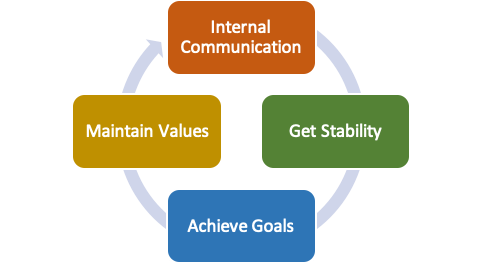
2.2 Scope. The communication processes within the organizational system constitute internal communication aimed at achieving stability in the organization to achieve its goals and creating and maintaining the organization’s culture (values and beliefs). 

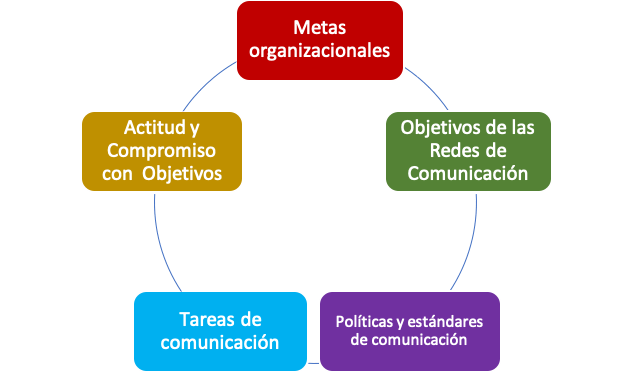
Diagram 1. Internal Communication

2.3 The concept of culture is broad and diverse as approaches and realities exist. It is a symbol that includes actions, practices, ethical codes, and values. The importance of a cultural approach to communication lies in the fact that the organization can be perceived as a symbolic construction of senses and meanings. A process through which values are formed, transmitted, and developed.

3. ORGANIZATIONAL COMMUNICATION STRUCTURE

The objective of a business is to remain in the market with dynamism and effectiveness, meeting the demands of today’s markets. Organizations must stay updated daily, comply with trends, and innovate products and services. This goal is only possible if there is a commitment at the corporate level to give value to the vital communication processes. Companies serve as a vehicle to achieve institutional objectives and compete with other organizations.

In section 1.4, we mentioned the types of communication, highlighting that organizational communication is developed mainly through internal communication. Many authors recognize that internal communication gives rise to the following:

• Prepare a recognition of the company in an atmosphere of friendship and stimulating work activities.

• Being able to get to know the organization to a great extent and become familiar with them.

• Recognition of employee performance

• Promote the exchange of information (usable or institutional communication) throughout the organization.

• Encourage a positive organizational climate for the benefit of the entire organization.

• The organizational climate is the personal and physical environment from which business activities are carried out.

• Makes a clear difference in the meaning and action of external communication. Understood as all activities carried out by the organization, whose purpose is to maintain relations with the outside, which many popularly call public relations.

3.1 Scenarios. We find three scenarios when looking inside an organization to see where it should carry out its organizational communication efforts.

• Physical setting. The internal sphere can be considered all the decorative elements of the organization and the considered informative ones. for example, the symbols of “no trespassing,” “only authorized personnel,” etc.

• Social scene. Includes all the factors that are related to people. In addition to the interaction between them. An example, the use of roles of each member within a work meeting can be considered.

• Institutional scenario. It relates the messages that the organization issues to its members, suppliers, customers, and other people involved; Examples of this type of communication in this scenario are basically: memos, blackboard notices, and advertising, among many others.

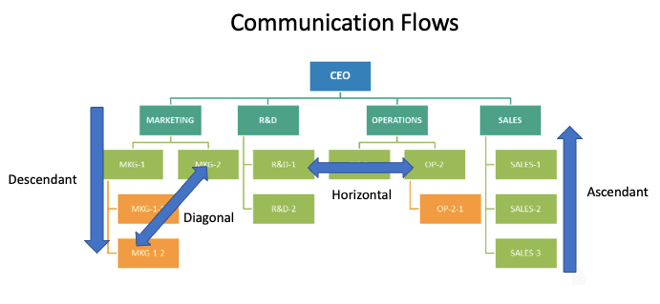
3.2 Flows. Within an organization, communication must flow in different ways. There is talk of ascending, descending, and crossed communication.

Diagram 2. ow each one is executed

Descendant Communication

Oral and written communication format is used. This type of communication occurs at high hierarchical levels and with a specific direction toward the lower levels. Among the principal means used for verbal communication with the staff are presented:

SpeechesVia telephone
Staff Meeting

Regarding written communication, the most used means are:

MemorandumLetters
ReportsOperations manual
BrochuresReports, among many more

Ascendant Communication

Unlike upward communication, this type of organizational communication occurs when workers (subordinates) transmit information to their bosses. That is, this information flows from lower levels to higher hierarchy levels. This communication occurs in companies whose environment and process allow the participation of employees. The most used means for ascending information transmission are:

Regular MeetingPersonalized Interview
Quality CircleVia telephone
Through SurveysComplaints and Suggestions System

Cross Communication

Currently, organizations make great use of cross-communication, both oral and written. They primarily improve the vertical flow of information within companies. Within this type of flow, horizontal direction communication and the well-known diagonal flow are considered. The primary purpose of cross-communication is to increase the speed of the transmission of information, improve the understanding of the transmitted information, and coordinate efforts to achieve the company’s objectives.

It is essential to clarify that the company only sometimes follows the established flows at hierarchical levels. It is necessary to protect the information in the face of information problems or obstacles under the following premises:

• The use of communication must be presented when the company’s needs are so required.

• It is essential that employees refrain from exceeding the limits of authority allowed

• Employees must keep their managers or superiors informed of high-importance cross-tasks as information is concerned.

3.3 Types. Each type of communication has its function and advantage within the organization. We have mentioned oral and written communication, and now we have added non-verbal.

Written Communication

Written communication is characterized by having clear, precise, concrete, and correct messages, ensuring that the message reaches the recipients clearly and understandably. Examples of written communication are an Internal bulletin, Memorandum, Circular, Announcements, and Employee surveys. The main advantage of written communication is that it provides a record, reference, and legal protection of what is communicated. It promotes the uniform application of procedures and norms that collaborate in reducing communication costs. In addition, the content and context of the information are controlled. It is very efficient in faithfully building the corporate culture.

Oral Communication

Oral communication occurs when a face-to-face meeting occurs between two or more people. Although it is highly used within an organization, the compression of the transmitted information is only sometimes what is desired or expected. Some examples of oral communication are Conferences, Meetings and Assemblies, Videoconferences, and Telephone calls.

Non-verbal Communication

This type of communication is used in many ways in the organization. From the gestures of a speaker to supporting visual media. Which also aims to provide feedback on what is said. Some examples of visual media are. Murals, notice board, signage.

4. BARRIERS AND FAILURES OF ORGANIZATIONAL COMMUNICATION

According to Business Review, 86% of executives say that ineffective communication is the leading cause of the collapse of a company or area of work and weakens the trust that workers can have in the leader. The main barriers in communication, specifically in the case of organizations, are 12.

Lack or absence of planningConfusing assumptions or facts
Distortion of message context and/or semanticsInformation with limited listening and early evaluation of it
Poorly expressed informationInternational context barriers
Loss of information due to limited retentionMistrust or fears in communication
Impersonal CommunicationInsufficient time in the face of changes
Information overloadOther communication barriers

5. SITUATIONS IN WHICH COMMUNICATION AT WORK IS DIFFICULT

There are numerous situations in which communication within an organization can be difficult. They range from the different perspectives of each member of the workgroup. These external factors alter the company, the pressure people usually go through when faced with various tasks, or even the absence of communication.

Communication is the response to avoid many problems. It takes place in a planned manner by applying the strategic communication plan. Several studies show that communication difficulties are given attention when it is too late. Next, we will see the five most frequent factors that hinder good communication.

 • Use the same message for everyone

•Not sharing knowledge

• Stress

• Rumors

• Complicated communication

6. CONSEQUENCES OF BAD COMMUNICATION IN THE COMPANY

The communicative deficiencies begin in the company’s bases, in the identity or organizational climate formed from the employees’ experience.

The guarantee of an excellent internal climate depends on business leaders. However, on many occasions, they are the ones who ignore the actual being of the company. They erroneously transmit the business philosophy to their subordinates or by needing more knowledge about assertiveness or leadership.

7. COMMUNICATION AUDIT

The organization must ensure that communication is efficient. Despite point 4, there are options to improve communication processes; one is the organizational communication audit. An audit is a tool for evaluating communication skills, connections, policies, and procedures.

Diagram 3. Communication elements concerning the objectives

The model presented is related to the operational focus of management. The most critical networks in terms of communication for auditing are the following:

• Regulatory network refers to the activities, policies, processes, regulations, and relationships between bosses and employees.

• Innovative network includes solutions to problems and alternatives to new developments.

• Network that leads to integration through recognition, bonuses, and job promotions that relate the company’s objectives with those of individuals.

• Network (informative-instructive) that contains announcements, and publications, thus forming a network of company information.

8. CONCLUSIÓN

Organizational communication is an essential factor for business management to thrive. The members of an organization must know the channels and codes through which they can express themselves. The barriers between sender and receiver must be avoided or overcome. Good management will make the organization last.

We have seen various types of messages. Preferably, formal communication will use so there are no misunderstandings between employees and bosses or bosses and clients, which could damage the client-company relationship.

A message expressed clearly, in an environment, and with an adequate communication channel can be converted into action by the recipient. On the other hand, an unclear, imprecise and ambiguous message can cause problems in an organization. To learn more about this topic or if you need to structure internal communications in your organization, write to me at 4ottog@gmail.com and tell me about your project or need. I will surely be able to help you.

LA COMUNICACIÓN INTERNA DEBE DEJAR DE ESTAR RELEGADA PARA SER DETERMINANTE DE UNA BUENA IMAGEN Y RELACIÓN CON LOS CLIENTES.

La tendencia a trabajar para ganarse un lugar en la opinión pública a través de la comunicación externa suele ser una trampa en la que han caído muchas organizaciones. Han aceptado la idea de que una buena comunicación externa es más importante que la comunicación interna. Dedican todo su esfuerzo a conseguir el protagonismo en los medios o redes sociales como gran objetivo. Sin embargo, la idea es correcta, pero a menudo está mal fundamentada. Quienes así piensan ya están atrapados en un falso dilema que les ha hecho inclinarse por la comunicación externa a costa de la comunicación interna. De este error se vuelve lentamente sólo si la comunicación con las audiencias internas está en crisis. Lo mejor es olvidar que se debe elegir uno sobre el otro. Los dos deben correr en paralelo, de forma activa, eficaz y aplicada sistemáticamente para que los resultados sean continuos y ascendentes.

Según Business Review, el 86% de los ejecutivos afirma que la comunicación ineficaz es la principal causa del colapso de una empresa o área de trabajo y debilita la confianza que los trabajadores pueden tener hacia el líder. Photo by:Jaime Lopes – Unsplash

Por: Otto Gutiérrez 4ottog@gmail.com

En la comunicación del mundo corporativo con audiencias de clientes y empleados que deben ser atendidos, ha comenzado a surgir un debate apasionante. Las corporaciones tradicionales y los empresarios exitosos proclaman hoy con distintos argumentos que lo más importante es comunicarse con los clientes. La idea de “el cliente primero antes que todo”. Otros que lograron priorizar a sus empleados dicen que lo más importante es comunicarse bien con ellos. Asegúrese de que sean empleados comprometidos y que hagan todo lo posible para ofrecer el mejor servicio al cliente. “El cliente confía en las personas de la organización.” Hay mucha literatura empresarial sobre esto y muchos estudios de casos. De ahí la tendencia a elegir un tipo de comunicación frente a otro. La tercera corriente de organizaciones reconocidas en sus campos continúa desarrollándose sin caer en la tendencia de la moda.

Esta tercera corriente es la adecuada. El mundo moderno no está aquí para dejar una opción de comunicación en detrimento de la otra. No tienes que ir a esos extremos. Ahora más que nunca, debemos tomar lo mejor de ambas tendencias y aplicarlas a nuestro objetivo. Mi experiencia lo ratifica, por eso creo y suscribo la importancia de la comunicación externa de la mano de la comunicación interna. Hoy describiré un plan de muestra para que los equipos de comunicación vean qué tan lejos o qué tan cerca están de un excelente proceso de comunicación interna.

La comunicación en el trabajo o comunicación organizacional es la facilitadora de procesos y actividades y se convierte en uno de los pilares fundamentales para asegurar el bienestar y cumplimiento de los objetivos de la entidad. Veamos el contexto en el que se hace esto y definamos algunos conceptos básicos.

1. CONTEXTO

1.1 Objetivo. Una comunicación organizacional eficiente tiene como objetivo asegurar una relación transparente entre todos los integrantes de una empresa y permitir el logro de sus objetivos de manera práctica, precisa y ágil.

1.2 Plan Estratégico de Comunicación. Es el instrumento ineludible y determinante de la forma en que una organización conduce su comunicación con sus públicos clave. Debe describir tanto en general como en detalle los medios, el tipo de comunicación, el tipo de mensajes, el tono, el formato, la periodicidad, los responsables y los mecanismos de evaluación y medición.

1.3 Tipos de Comunicación. Son comunicación interna y externa. La comunicación interna se dirige a los miembros de la organización como una audiencia dentro de ella. Externa, se relaciona con todo lo que tiene que ver con el exterior de la organización y los públicos allí establecidos.

1.4 Concepto de Comunicación. Hay comunicación usable e institucional. La utilizable es aquella que permite la realización de los procesos de la empresa para el cumplimiento de sus objetivos. La institucional es la que está destinada a construir la cultura corporativa de la organización, y esa es clave para que la usufructuaria adquiera una mayor dimensión ética.

2. COMUNICACIÓN ORGANIZATIVA

2.1 Fundación. En una organización, la comunicación alimenta a la empresa en el continuo intercambio de conocimientos y cultura empresarial con el entorno e internamente con sus integrantes.

• Es el eje fundamental para la productividad.

• La comunicación efectiva permite la optimización de procesos.

• Permite construir un excelente clima organizacional. De esta manera, los empleados se sentirán parte esencial de la organización.

2.2 Alcance. Los procesos de comunicación dentro del sistema organizacional constituyen la comunicación interna encaminada a lograr la estabilidad en la organización para lograr sus objetivos y crear y mantener la cultura de la organización (valores y creencias).

Diagrama 1. Comunicación Interna

2.3 El concepto de cultura es amplio y diverso en la medida en que existen enfoques y realidades. Es un símbolo que incluye acciones, prácticas, códigos éticos y valores. La importancia de un enfoque cultural de la comunicación radica en que la organización puede ser percibida como una construcción simbólica de sentidos y significados. Un proceso a través del cual se forman, transmiten y desarrollan valores.

3. ESTRUCTURA DE COMUNICACIÓN ORGANIZATIVA

El objetivo de una empresa es permanecer en el mercado con dinamismo y eficacia, atendiendo las exigencias de los mercados actuales. Todos los días, las organizaciones deben mantenerse actualizadas, cumplir con las tendencias e innovar productos y servicios. Este objetivo solo es posible si existe un compromiso a nivel corporativo para dar valor a los procesos vitales de comunicación. Las empresas sirven como vehículo para alcanzar los objetivos institucionales y competir con otras organizaciones.

En el apartado 1.4 mencionamos los tipos de comunicación, destacando que la comunicación organizacional se desarrolla principalmente a través de la comunicación interna. Muchos autores reconocen que la comunicación interna da lugar a:

• Preparar un reconocimiento de la empresa en un ambiente de amistad y actividades laborales estimulantes.

• Ser capaz de conocer en profundidad la organización y familiarizarse con ella.

• Reconocimiento del desempeño de los empleados

• Promover el intercambio de información (comunicación útil o institucional) en toda la organización.

• Fomentar un clima organizacional positivo en beneficio de toda la organización.

• El clima organizacional es el entorno personal y físico desde el cual se desarrollan las actividades empresariales.

• Marca una clara diferencia en el significado y la acción de la comunicación externa. Entendida como el conjunto de actividades realizadas por la organización, cuyo objeto es mantener relaciones con el exterior, lo que popularmente muchos denominan relaciones públicas.

3.1 Escenarios. Encontramos tres escenarios al mirar dentro de una organización para ver dónde debe llevar a cabo sus esfuerzos de comunicación organizacional.

• Entorno físico. Se pueden considerar como ámbito interno todos los elementos decorativos de la organización y los considerados informativos. por ejemplo, los símbolos de “prohibido el paso”, “solo personal autorizado”, etc.

• Escena social. Incluye todos los factores que están relacionados con las personas. Además de la interacción entre ellos. Un ejemplo, se puede considerar el uso de roles de cada integrante dentro de una reunión de trabajo.

• Escenario institucional. Relaciona los mensajes que la organización emite a sus miembros, proveedores, clientes y demás personas involucradas; Ejemplos de este tipo de comunicación en este escenario son básicamente: memorándums, avisos de pizarra, publicidad, entre muchos otros.

3.2 Flujos. Dentro de una organización, la comunicación debe fluir de diferentes formas. Se habla de comunicación ascendente, descendente y cruzada. 

Diagrama 2, cómo se ejecuta cada una.

Comunicación descendiente

Se utiliza el formato de comunicación oral y escrita. Este tipo de comunicación se da en niveles jerárquicos altos y con una dirección específica hacia los niveles inferiores. Entre los principales medios utilizados para la comunicación verbal con el personal se presentan:

DiscursosVía telefónica
Reunión de personal

En cuanto a la comunicación escrita, los medios más utilizados son:

MemorandosCartas
AnálisisManuales Operativos
FolletosInformes, entre muchos más.

Comunicación Ascendente

A diferencia de la comunicación ascendente, este tipo de comunicación organizacional ocurre cuando los trabajadores (subordinados) transmiten información a sus jefes. Es decir, esta información fluye desde los niveles inferiores hacia los niveles jerárquicos superiores. Esta comunicación se da en empresas cuyo entorno y proceso permiten la participación de los empleados. Los medios más utilizados para la transmisión de información ascendente son:

Reuniones RegularesEntrevistas Personales
Circulo de CalidadVía telefónica
A través de EncuestasSistema de Quejas y Sugerencias

Comunicación cruzada

Actualmente, las organizaciones hacen un gran uso de la comunicación cruzada, tanto oral como escrita. Principalmente mejoran el flujo vertical de información dentro de las empresas. Dentro de este tipo de flujo se considera la comunicación en dirección horizontal y el conocido flujo diagonal. El objetivo principal de la comunicación cruzada es aumentar la velocidad de la transmisión de información, mejorar la comprensión de la información transmitida y coordinar los esfuerzos para lograr los objetivos de la empresa.

Es fundamental aclarar que la empresa no siempre sigue los flujos establecidos en los niveles jerárquicos. Es necesario proteger la información ante problemas u obstáculos de información bajo las siguientes premisas:

• El uso de la comunicación debe presentarse cuando las necesidades de la empresa así lo requieran.

• Es fundamental que los empleados se abstengan de exceder los límites de autoridad permitidos

• Los empleados deben mantener informados a sus gerentes o superiores sobre tareas cruzadas de gran importancia en materia de información.

3.3 Tipos. Cada tipo de comunicación tiene su función y ventaja dentro de la organización. Hemos mencionado la comunicación oral y escrita, y ahora hemos añadido la no verbal.

Comunicación escrita

La comunicación escrita se caracteriza por tener mensajes claros, precisos, concretos y correctos, procurando que el mensaje llegue a los destinatarios de forma clara y comprensible. Ejemplos de comunicación escrita son un boletín interno, un memorando, una circular, anuncios y encuestas a los empleados. La principal ventaja de la comunicación escrita es que proporciona un registro, referencia y protección legal de lo que se comunica. Promueve la aplicación uniforme de procedimientos y normas que colaboran en la reducción de los costos de comunicación. Además, se controla el contenido y el contexto de la información. Es muy eficiente en la construcción fiel de la cultura corporativa.

Comunicación oral

La comunicación oral ocurre cuando se produce un encuentro cara a cara entre dos o más personas. Aunque es muy utilizado dentro de una organización, la compresión de la información transmitida no siempre es la deseada o esperada. Algunos ejemplos de comunicación oral son las Conferencias, Reuniones y Asambleas, Videoconferencias y Llamadas Telefónicas.

Comunicación no verbal

Este tipo de comunicación se utiliza de muchas maneras en la organización. Desde los gestos de un orador hasta los medios visuales de apoyo. El cual también pretende retroalimentar lo dicho. Algunos ejemplos de medios visuales son. Murales, tablón de anuncios, señalización.

4. BARRERAS Y FALLAS DE LA COMUNICACIÓN ORGANIZACIONAL

Según Business Review, el 86% de los ejecutivos afirma que la comunicación ineficaz es la principal causa del colapso de una empresa o área de trabajo y debilita la confianza que los trabajadores pueden tener hacia el líder. Las principales barreras en la comunicación, específicamente en el caso de las organizaciones, son doce.

Falta o ausencia de planificación.Suposiciones o hechos confusos
Distorsión del contexto y/o la semántica del mensajeInformación con escucha limitada y evaluación temprana de la misma
Información mal expresada.Barreras del contexto internacional
Pérdida de información debido a retención limitadaDesconfianza o miedos en la comunicación.
Comunicación impersonalTiempo insuficiente ante los cambios
Sobrecarga de informaciónOtras barreras de comunicación

5. SITUACIONES EN LAS QUE LA COMUNICACIÓN EN EL TRABAJO ES DIFÍCIL

Hay numerosas situaciones en las que la comunicación dentro de una organización puede ser difícil. Van desde las diferentes perspectivas de cada miembro del grupo de trabajo. Estos factores externos alteran a la empresa, la presión que suelen sufrir las personas ante diversas tareas, o incluso la ausencia de comunicación.

La comunicación es la respuesta para evitar muchos problemas. Se desarrolla de forma planificada aplicando el plan estratégico de comunicación. Varios estudios muestran que se presta atención a las dificultades de comunicación cuando ya es demasiado tarde. A continuación, veremos los cinco factores más frecuentes que dificultan una buena comunicación.

Use el mismo mensaje para todos

No compartir conocimientos

Estrés

Rumores

Comunicación complicada

6. CONSECUENCIAS DE LA MALA COMUNICACIÓN EN LA EMPRESA

Las deficiencias comunicativas comienzan en las bases de la empresa, en la identidad o clima organizacional formado a partir de la experiencia de los empleados.

La garantía de un excelente clima interno depende de los líderes empresariales. Sin embargo, en muchas ocasiones son ellos los que ignoran el ser real de la empresa al transmitir erróneamente la filosofía empresarial a sus subordinados o al carecer de conocimientos sobre asertividad o liderazgo.

7. AUDITORÍA DE COMUNICACIÓN

La organización debe asegurarse de que la comunicación sea eficiente. A pesar del punto 4, existen opciones para mejorar los procesos de comunicación; una es la auditoría de comunicación organizacional. Una auditoría es una herramienta para evaluar las habilidades de comunicación, las conexiones, las políticas y los procedimientos.

Diagrama 3. Elementos de comunicación en relación con los objetivos

El modelo presentado está relacionado con el enfoque operativo de la gestión. Las redes más críticas en términos de comunicación para la auditoría son las siguientes:

• Red regulatoria se refiere a las actividades, políticas, procesos, regulaciones y relaciones entre jefes y empleados.

• Red innovadora incluye soluciones a problemas y alternativas a nuevos desarrollos.

• Red que propicie la integración a través de reconocimientos, bonificaciones y promociones laborales que relacionen los objetivos de la empresa con los de las personas.

• Red (informativo-instructivo) que contiene anuncios y publicaciones, formando así una red de información empresarial.

8. CONCLUSIÓN

La comunicación organizacional es un factor esencial para que la gestión empresarial prospere. Los miembros de una organización deben conocer los canales y códigos a través de los cuales pueden expresarse. Las barreras entre emisor y receptor deben evitarse o superarse. Una buena gestión hará que la organización perdure.

Hemos visto varios tipos de mensajes. Preferiblemente se utilizará la comunicación formal para que no haya malentendidos entre empleados y jefes o jefes y clientes, que puedan dañar la relación cliente-empresa.

Un mensaje expresado de forma clara, en un entorno y con un canal de comunicación adecuado puede convertirse en acción por parte del receptor. Por otro lado, un mensaje poco claro, impreciso y ambiguo puede causar problemas en una organización.

Para conocer más de este tema o si tiene necesidades de estructurar una estrategia de comunicacion interna en su organizacion lsimplemente escríbame a 4ottog@gmail.com cuénteme su proyecto o necesidad y seguro podre ayudarlo.

IN COLOMBIA, GUSTAVO PETRO’S LEFTIST FOUR-TERM BEGINNING AND GOVERNMENT COMMUNICATION IS THE GREAT LACKING THAT WEAKENS HIM AT THE BEGINNING

Gustavo Petro prepared for 12 years to reach the Presidency of Colombia. He lost in the first three seasons but finally prevailed with tenacity and persistence in the fourth. When Petro was proclaimed president-elect in June 2022, it was clear that he had prepared himself to win the elections but not to govern. He lacks communication in the new role of President. He does not know how the media moves. He misunderstands social media. Because of all this, the first problems are happening.

Petro is not a communicator and does not have the leadership to be one. His government and his statements are not aligned with any communicative management model. He does not know the essence of communication and would be ill-advised. As President becomes disorganized and erratic and sends highly debilitating messages. Photo by: Las2orillas

By: Otto Gutiérrez (4ottog@gmail.com)

At the end of his first month as President of Colombia, Gustavo Petro clarified several things. First, he does not know the principles of communication, the media, social networks, and the dynamics of how they move. Petro is the first President of the left elected in Colombia. He raised the flag of change that the citizens accepted and voted for him. So far a historic achievement. President Petro gained a lot of experience as a candidate and showed by winning that he was a complete novice as President. From an experienced senator and head of the opposition, he became a trainee executive leader. Here we will see how he is not a communicator and does not have the leadership to be one. His government is based on five ministers who carry the weight of change policies and are not good communicators. Over the first few days, he becomes disorganized and erratic and sends highly debilitating messages. His government and his statements are not aligned with any communicative management model. He does not know the essence of communication and would be ill-advised.

NEITHER COMMUNICATOR NOR LEADER. Serious communication problems surfaced at the end of the campaign. He had not had a communication reference and was desperately looking for one. Several advisers accompanied him in the campaign, but he never had a press officer. Once elected, he hired the press officer for candidate Fajardo, but she ended up as a private secretary. Information and communication were always ambiguous, clumsy, and disjointed from any strategy or strategic axis. Once elected, he never set guidelines for his ministers. He also did not organize a plan or a workshop to say how he understood communication or wanted to be seen. These are basic things. He let chaos grow among his ministers, who came out with all kinds of statements, contradictions, and announcements without meaning or disconnected from reality. Despite taking office on August 7, the government’s disorder continues, and the worst does nothing to stop it. These mistakes already affect his reputation and his positioning.

DISORGANIZED AND ERRATIC. Efficiently, an elected president takes care of putting together his cabinet after the election. He organizes it and sets a plan, guidelines, goals, and measurements individually and collectively. He did not attend key events without a credible and public excuse. He worried about personal things and was not seen communicating a change plan or a legislative agenda in Congress. His members of Congress handled that with the political parties, which affected him. For several weeks the country did not know anything about its elected President. Petro gave up important spaces and times to build his position, leadership, agenda, reputation, and solidarity. Between July and August, he made it clear that the President does not value the order and control of the message. Perhaps he believed that the Presidency lasted four months, not four years, like the campaign.

READ HERE: THE CHALLENGE IS TO GO FROM THE PRESS IN THE CAMPAIGN TO THE COMMUNICATION OF GOVERNMENT WITH EFFICIENCY AND SECURITY. https://bit.ly/3CJsSXa

THE MINISTERS DO NOT HELP. President Petro seems to have left the government’s communication adrift or to each minister’s knowledge. Each acts as a loose wheel. The critical issues of the government are concentrated in five of them. They have already shown that they are not good communicators despite their excellent training in their professional specialties. Those five ministers are Finance, Defense, Foreign Affairs, Health, and Energy. They all make the same statements and mistakes. They have no media skills. They believe only in the traditional press that today competes with the new media. They do not understand the form and substance equation of messages and communication. They believe only in the argument. They show a significant risk of falling into error due to a lack of skills in speaking as spokespersons. They suffer from the syndrome of the dictatorship of knowledge, believing that they should speak for the 50 colleagues of their intellectual level and not for 50 million citizens. They are terrified by the maxim, “Reality is not what it is but what the media say it is.”

Along with the five key ministers, three other officials will be a source of problems later when they take more flights. The Ministers of Justice, Culture, and Vice President promise to be the source of many caricatures, memes, and jokes. They have no empathy for the citizens.

READ HERE: A GOOD COMMUNICATION OFFICE HAS EFFECTIVE SPOKESPERSONS AND KEEPS THEM WELL TRAINED; THAT’S THE KEY. https://bit.ly/3TtJTuv

CAMPAIGN vs. GOVERNMENT. At this point, President Petro has the most severe problems with his idea of communicating. He believes he can continue campaigning, and people want to see him as President. He assumes that as President, he can continue to use negative information and discredit strategies. He blindly trusts Mr. Guanumen. He is unaware that, as a government official, the media dynamics are not the same as that of the campaign. The media have sources that feed them and egos that seek to stand out. The constitution offers duties and rights for the press and officials. For their part, citizens have a powerful weapon, that is, perception. With it, they penalize the dignitary who is not clear. Guanumen promises to be more damaging if he continues the harmful campaign practice. Also, when you are in government, the image is built with messages backed by attitudes that people see. If Petro does not lead, does not execute, and fails to communicate his goals, there will be no Guanumen who can do much.

SOLUTION IN SIGHT. All these defects, vices, and problems have an answer. Every day that goes by without corrective action is valuable time lost. President Petro must take the leadership that he has not had. Organize his team, instructing them on the value of positive, constructive, and holistic communication with citizens. He must organize his agenda, fulfill it, generate attitudes that support his words, and build a message. Defining his style, brand, attributes, and the desired perception will be imperative. He must stop improvising speeches and measures. Be more strategic. Make better use of the time of the processes in the government. He must understand that he is the President and not the leader of the opposition. He must show that he is the President of all to unite a polarized country. Communicate that his detractors are included in his government and not excluded. He must be a leader, draw attention to his team, demand dedication, and highlight achievements. He has to disclose how he will measure his performance and that of his entire cabinet. The people must see everything. The deadline to take all these actions is the 100th day. After that, it will be challenging to align with public opinion. He has already lost 24 days. You still have time. As President, he can have whatever help he wants or needs.

Given everything happening, the question arises: why has something so chaotic been allowed to happen? There would be two answers. On the one hand, that communication was not effectively the virtue of President Petro, and media prominence was achieved by his role as an opponent rather than by his communicator. That is why it does not give value to the way of being perceived by the majority. On the other hand, the theory is gaining strength. Petro would allow wear and tear to lower standards, free the government from those challenges and not have to worry about meeting high goals in communication matters. Critics compare it to the famous controlled explosion made famous by his campaign circle to cover up the candidate’s mistakes.

The historical opportunity of the change that Petro wants to execute is unique. The value of this government’s communication is not only that it shows that he did everything he promised because that may be impossible in four years. The importance for Colombia of this first step of change is that if it is communicated well, there will be more presidents like Petro. On the other hand, if it is done wrong, the door will be closed to these leaders of change. The presidents of the establishment will return, like those who came before him. Carrying out the reforms will be very important. Still, it will also be decisive for the citizens to understand that they were not mistaken in opening the door to new airs. That is achieved with pure and authentic communication. It is in your hands to endure over time or remain as a fact in history. If you are interested in implementing government communication strategies or are already in the process of improving one and think I can help, do not hesitate to write to me. To learn more about this topic or if you have specific needs, write to me at 4ottog@gmail.com, tell me about your project or demand, and I can surely help you.

EN COLOMBIA, COMENZÓ EL CUATRENIO IZQUIERDISTA DE GUSTAVO PETRO Y LA  COMUNICACIÓN DE GOBIERNO ES LA GRAN CARENCIA QUE LO DEBILITA AL EMPEZAR

Gustavo Petro se preparó durante 12 años para llegar  a la Presidencia de Colombia. Perdió en las tres primeras campañas pero logró imponerse con tesón y persistencia en la cuarta finalmente. Desde cuando fue proclamado presidente electo en junio de 2022 quedó en evidencia que, como buen político de vieja guardia, se había preparado para ganar las elecciones pero no para gobernar. Le falta comunicación en el nuevo papel de Presidente. Desconoce como se mueven los medios de comunicación.  Mal entiende las redes sociales. Por todo eso está pasando los primeros problemas.

Petro no es comunicador y no tiene liderazgo para serlo. Su gobierno y sus mensajes no se alinean a ningún modelo de gestión comunicativa. Desconoce la esencia de la comunicación y estaría mal asesorado. Como presidente se ve desorganizado y errático y manda mensajes altamente debilitadores. Photo by: Las2orillas.

Por: Otto Gutiérrez (4ottog@gmail.com)

Al terminar el primer mes como Presidente de Colombia Gustavo Petro ha dejado varias cosas en claro. La primera  que no conoce los principios de la comunicación, los medios, las redes sociales y la dinámica como se mueven. Es el primer Presidente de la izquierda elegido en Colombia. Él propuso la bandera de cambio que los ciudadanos aceptaron y votaron. Hasta ahí un logro histórico.  El Presidente Petro obtuvo mucha experiencia como candidato y demostró al ganar que era un completo novato como presidente. De senador experimentado y jefe de la oposición pasó a ser aprendiz de líder del ejecutivo.  Aquí veremos cómo no es comunicador y no tiene liderazgo para serlo. Su gobierno se fundamenta en cinco ministros que llevan el peso de las políticas de cambio y tampoco son buenos comunicadores. Con el correr de los primeros días se ve desorganizado y errático y manda mensajes altamente debilitadores. Su gobierno y sus mensajes no se alinean a ningún modelo de gestión comunicativa. Desconoce la esencia de la comunicación y estaría mal asesorado.

NI COMUNICADOR NI LÍDER. Los serios problemas de comunicación salieron a flote al final de la campaña. No había contado con un referente de comunicación y desesperadamente buscaba uno. En la campaña lo acompañaron varios asesores pero nunca tuvo un jefe de prensa. Ya electo contrató a la jefe de prensa del candidato Fajardo pero ella terminó como secretaria privada. La información y comunicación siempre fue ambigua, torpe y desarticulada de alguna estrategia o eje estratégico. Ya electo nunca fijó pautas a sus ministros. Tampoco organizó un plan ni un taller para decir cómo entendía la comunicación o cómo quería ser visto. Estas son cosas básicas. El resultado fue que dejó crecer el caos entre sus ministros quienes salieron con todo tipo de declaraciones, contradicciones y anuncios sin sentido o desconectados de la realidad. A pesar de haber asumido el cargo el siete de agosto, el desorden del gobierno continua y lo peor no hace nada para detenerlo. Estos errores ya afectan su reputación y su posicionamiento.

DESORGANIZADO Y ERRÁTICO. Eficientemente, un presidente electo se ocupa de conformar su gabinete tras la elección. Lo organiza y fija una agenda, pautas, metas y mediciones individual y colectivamente. Tampoco organizó su agenda personal. Faltó a eventos claves sin una excusa creíble y pública. Se preocupó por formas muy personales y no se le vio comunicando un plan de cambio, ni en una agenda legislativa en el Congreso. Eso lo manejaron sus congresistas con los partidos políticos, lo cual lo afectó. En varias semanas el país no supo nada de su Presidente electo. Petro cedió espacios y tiempos importantes para construir su posicionamiento, liderazgo, agenda, reputación y solidaridad. Entre julio y agosto dejó ver que el Presidente no de atribuye valor al orden y control del mensaje. Quizá creyó que la Presidencia como la campaña son cuatro meses y no cuatro años.

LEA AQUI: EL RETO ES PASAR DE LA PRENSA EN CAMPAÑA A LA COMUNICACIÓN DE GOBIERNO CON EFICIENCIA Y SEGURIDAD. https://bit.ly/3QV1biU

LOS MINISTROS NO AYUDAN. El Presidente Petro parece haber dejado a la deriva o al conocimiento de cada ministro la comunicación del gobierno. Cada uno actúa como rueda suelta. Los temas claves del gobierno están concentrados en cinco de ellos y ya demostraron que no son buenos comunicadores a pesar de la buena formación que tienen en sus especialidades profesionales. Esos cinco ministros son Hacienda, Defensa, Canciller, Salud y Minias y Energía. Todos ellos cometen los mismos errores. No tienen habilidades con medios de comunicación. Creen solo en la prensa tradicional que hoy compite con los nuevos medios. No entienden la ecuación forma y fondo de los mensajes y la comunicación. Creen solo en el fondo. Muestran gran riesgo de caer en el error por falta de competencias en vocería. Padecen el síndrome de la dictadura del conocimiento, que es creer que deben hablar para los 50 colegas de su nivel intelectual y no para 50 millones de ciudadanos. Los aterra la máxima que dice ”La realidad no es la que es sino la que dicen los medios que es”.

LEA AQUI: UNA BUENA OFICINA DE COMUNICACIÓN TIENE VOCEROS EFECTIVOS Y LOS MANTIENE BIEN ENTRENADOS, AHÍ ESTÁ LA CLAVE. https://bit.ly/3CJriVu

Junto a los cinco ministros claves hay otros tres funcionarios que serán fuente de problemas más adelante cuando tomen más vuelo, hayan pasados los meses y el manejo de la comunicación sea muy pobre. Los ministros de Justicia y Cultura así como la Vicepresidente prometen ser fuente de muchas caricaturas, memes y chistes. No tienen empatía con los ciudadanos.

CAMPAÑA vs GOBIERNO. En este punto el Presidente Petro tiene los problemas más severos de su idea de comunicar. Cree que puede seguir en campaña y la gente lo quiere ver Presidente. Asume como Presidente que puede seguir utilizando las estrategias de información negativa y desprestigio. Confía ciegamente en el señor Guanumen. Desconoce que al ser gobierno la dinámica de los medios no es la misma de campaña. Los medios tienen fuentes que los alimentan y egos que buscan sobresalir. La constitución ofrece deberes y derechos para medios y funcionarios. Por su parte los ciudadanos tienen un arma poderosa que es la percepción. Con ella castigan al gobernante que no es claro. Guanumen promete ser más dañino si continúa con la práctica nociva de la campaña. Además, cuando se es gobierno la imagen se construye con mensajes respaldados con actitudes que la gente ve. Si Petro no lidera, no ejecuta y no logra comunicar sus metas no habrá Guanumen que pueda hacer mucho.

SOLUCIÓN A LA VISTA. Todos estos defectos, vicios y problemas tienen solución. Cada día que pase sin tomarse una acción correctiva es tiempo perdido que es muy valioso. El Presidente Petro debe tomar el liderazgo que no ha tenido. Organizar a su equipo instruyéndolo sobre el valor de la comunicación, positiva, constructiva y holística con los ciudadanos. Debe organizar su agenda, cumplirla y generar actitudes que respalden sus palabras y construyan mensaje. Muy importante será definir su estilo, su marca, sus atributos y la percepción deseada. Debe dejar de improvisar discursos y medidas. Ser más estratégico. Utilizar mejor el tiempo de los procesos en las cosas del gobierno. Él debe entender que es el Presidente y no el líder de la oposición. Debe mostrar que gobierna para todos con el fin de unir un país polarizado. Comunicar  que sus detractores están incluidos en su gobierno y no excluidos. Debe ser líder, llamar la atención a su equipo, exigir dedicación y destacar logros. Tiene que divulgar la forma como medirá su desempeño  y el de todo su gabinete. Todo debe verlo la gente. El plazo para tomar todas estas acciones es el día 100. Después será muy difícil alinearse con la opinión pública. Ya ha perdido 24 días. Aún tiene tiempo. Como Presidente puede tener la ayuda que desee o necesite.

Ante todo lo que está ocurriendo surge la pregunta ¿por qué  se ha permitido que ocurra algo tan caótico? Habría dos respuestas. Por un lado,  que efectivamente la comunicación no es el fuerte del Presidente Petro y la figuración mediática la ha conseguido por su papel de opositor más que por sus virtudes de comunicador. Por eso no le da valor a forma de ser percibido por las mayorías. Por el otro, toma fuerza la teoría de que Petro estaría permitiendo un desgate para bajar los estándares, liberar al gobierno de esos retos y no tener que preocuparse por el cumplimiento de metas altas en materias comunicativas. Los críticos lo comparan con la famosa explosión controlada que hizo famoso su círculo de campaña para cubrir las equivocaciones del candidato.

La oportunidad histórica del cambio que quiere ejecutar es única. El valor de la comunicación de este gobierno no radica solo en que muestre que hizo todo lo prometido porque eso quizá sea imposible en cuatro años. La trascendencia para Colombia de este primer paso de cambio es que sí se comunica bien habrá más presidentes como Petro. En cambio si se hace mal se cerrará la puerta a estos liderazgos de cambio y regresarán los presidentes del establecimiento como los que vinieron antes que él. Hacer las reformas será muy importante pero igualmente será decisivo que los ciudadanos entiendan que no se equivocaron al abrir la puerta a nuevos aires. Eso se logra con comunicación pura y auténtica. Está en sus manos perdurar en el tiempo o solo quedar como un dato en la historia.

Si usted está interesado en implementar estrategias de comunicación de gobierno o ya está en un proceso para mejorar una y cree que puedo aportarle, no dude en escribirme. Para conocer más de este tema o si tiene necesidades específicas simplemente escríbame a 4ottog@gmail.com, cuénteme su proyecto o necesidad y seguro puedo ayudarlo.

THE FANS ARE THE CENTER OF THE SPORT, AND IN THE MARKETING WITH THEM, YOU ALSO WIN OR LOSE

To say that the fans are the center of the sport and its business seems like a no-brainer. In the XXI century, and oddly enough, many countries, sports, or markets seem to have forgotten. They try to build the commercialization of the sport by ignoring the fans, who are the other essence of the competition. The incredible thing is that many survive, ignoring this maximum sentence. They must fight hard to produce profits in sports marketing while ignoring the fans. The question will always be, why do they ignore them? If the fans are not only the purchasing power but the heart and the emotion for their sports idols. They have a passion they cannot stop and that marketing must take advantage of—those who make it win.

The marketing with fans makes the teams universal, winners businesses waiting that fans with budgets and emotions to spend on whatever is on offer are waiting for them. Photo by: Emma Dau – Unsplash

By: Otto Gutierrez (4ottog@gmail.com)

A few weeks ago, the arrival of the new owners of Chelsea FC from London put the issue of fans and their importance in generating profits back on the table for sports businesses. The millionaire owner sold it and made it very profitable. Also, the buyer Todd Boehly paid the sum of 2.5 Billion pounds and promised an investment of another 1.7 Billion pounds, keeping one of the most beloved teams hated by England. By saying this, we are talking about fans for and against the team. We talk about emotions—the desire to win and stay on top. These are barely apparent objectives that many football teams do not have today.

Perhaps what makes you think the most after buying Chelsea in the past and the philosophy of the new owner. Boehly is a sports entrepreneur who owns the Dodgers professional baseball team in the United States and the Los Angeles Lakers’ NBA squad. In short, the new owner needed 3,000 million dollars to close the operation. Here is when you have to see Boehly’s philosophy. In his teams, he preached that the fans are the center of his business. Two things must be done towards them. The first to make the maximum effort every day to improve the fans’ experience in front of their team. In the second, see what was not included in the first and do it. Everything so that the fans are in the center, and the business begins. With these two ideas in mind, it is explained how someone invests 3 billion dollars in a team that seemed to have done everything with few possibilities for growth. Boehly has made it clear that by applying his philosophy, there is plenty of room to grow, recoup his investment and make a profit.

Let’s take a quick look at the world’s top ten highest-earning soccer teams in 2021, according to The Deloitte Intelligence Tool. The London Blues are ranked eighth, above only Tottenham and Juventus. (Millions of dollars)

We talk about estimated and average percentages because they vary according to teams and countries. Let’s now see how in general, the most influential teams in the world generate their income. Then have the tools to see if these sources of income are taken advantage of or ignored in our local markets.

TV and Broadcasting: They are 30% of the income. Include the principal TV rights and other minor ones. Each team uses its media and channels to offer what is not included in the central agreement.

Sponsorship, Advertising, and Commercial: it reaches 13%. The shirt’s main sponsor is usually the club’s most significant business. The naming rights are valuable, as are the brands of other products accompanying the team.

Prize Money: It is 1% of the income if you only compete in a few stages of the international tournaments. It can double if you reach the final and win it. The low percentage of the “prize” is tied to higher income from streaming, merchandise, and digital shares if the last tournament game is reached. However, it can go up to 10%.

Matchday Revenue: Up to 16% of match day revenue is generated through ticket sales and increasingly from corporate or group packages. Objective To make the stadium the best experience to monetize the day of the game as much as possible.

Hospitality, Events, and New Media: reaches 15%. Here we include the generation of resources through digital media and social networks marketing as campaigns, activations, subscriptions to exclusive content, memberships, and sports tourism. In addition to tickets, clubs can earn by organizing other events or renting facilities for different sports.

Retail/Merchandise: This is 9% and corresponds to apparel sales. At the same time, official shops and websites sell just about every item you can imagine bearing the club crest. In addition, licensing agreements for club-branded products must be added to this.

Transfers: Transfers are usually an expense, but astute recruiting and youth development can make them a reliable source of income. Per season it can reach 11% of revenue.

Other sporadic sources such as the development of club properties are essential when they occur but are not regular income in the generality of a season, so they are not considered permanent.

Suppose we apply Boehly’s philosophy to the activities with which a team receives its income. In that case, we will see that the fans are at the center of each exercise. They are the ones who watch TV when they don’t go to the stadium. They are the ones who can consume the products of the sponsors. In the eventuality of the tournament finals, they will be the biggest consumers at the most emotional moment for them. They are the raison d’être for hospitality outside the stadium, face-to-face and digital events, and all the volume of consumption they generate. Not to mention the sale of items that cannot be limited to traditional purchases but must be expanded to new forms and alliances. Finally, it is the fans who can pay to help with the incorporation of the club. Analyst Debanjan Banerjee defines it all in one sentence, “without fans; marketing would be a non-existent path in the world of football.” It would only be necessary to add that teams would continue to be local players with limited income without marketing. Marketing to fans is what makes them universal, winning businesses waiting that fans with budgets and emotions to spend on whatever is on offer are waiting for them.

That said, each can conclude their country, medium, or market. I will land it in Colombia. Big teams with history, wins, and fans make their yearly income from just TV, matchday, merchandise, and very little sponsorship. Said in percentages, they only capture 60% and relegate the remaining 40%. Something that nobody is allowed today in the world.

On the other hand, small teams with no history win or fans must turn to TV, transfers, and some sponsorships. They only manage to generate 46% of these activities and resign 54%. In conclusion, the teams in Colombia let go of half of their income possibilities compared to those who know how to do it worldwide.

Colombian clubs need to have the courage to launch themselves into universal brands and stop being local. Only 15% of the teams could do it. For fear, they continue to be relegated to playing in a world where what is not achieved on the field is achieved with marketing. It is hard to believe that this is reality. It is hard to believe how they survive with this entrepreneurship poverty, as brands lie on TV distribution as the primary income source. It would be as if people lived without working and only with the annual tax refund. The dependence on TV income must change to improve the level of competition and entertainment. In Colombia, passion is wasted while the world tries to promote and maintain it. The ten-year football survey proves it.

An intervention in sports marketing by the owners of the teams is urgent. It is not difficult, but it is not utopian. It is just showing willingness and transparency. The fans will be in charge of increasing the income. Suppose you are interested in implementing marketing strategies or are already in the process of improving your profits. In that case, do you think I can help you? To learn more about this topic or if you have specific needs, write to me at 4ottog@gmail.com, tell me about your project or demand, and I can surely help you. Do not hesitate to write me.

Note: With the end of the presidential campaign and the beginning of a new government, many have written to me asking about an article discussing the transition from campaign communication to government communication. Here I leave the link. https://bit.ly/3QV1biU

LOS FANS SON EL CENTRO DEL DEPORTE Y EN EL MERCADEO CON ELLOS TAMBIÉN SE GANA O SE PIERDE 

Decir que los fans son el centro del deporte y sus negocios parece una cosa obvia. En pleno siglo XXI y aunque parezca mentira muchos países, deportes o mercados parecen haberlo olvidado. Ellos tratan de construir la comercialización del deporte ignorando a los fans que son la otra esencia después de la competencia. Lo increíble es que muchos de ellos logran sobrevivir ignorando esta sentencia máxima. Es claro que deben luchar muy fuerte para producir utilidades en mercadeo deportivo ignorando a los fans. Siempre la pregunta será ¿porque los ignoran? si los fans no solo son el poder adquisitivo sino el corazón y la emoción por sus ídolos deportistas. Ellos tienen una pasión que no pueden frenar y que el mercadeo debe aprovechar. Los que lo logran ganan.

El mercadeo con los fans es lo que los convierte a los equipos en negocios universales y ganadores que esperan aficionados con presupuestos y emociones para gastar en todo lo que se les ofrezca. Photo by: Emma Dau – Unsplash

Por: Otto Gutiérrez (4ottog@gmail.com)

Hace algunas semanas la llegada de los nuevos dueños del Chelsea FC, de Londres volvió a poner sobre la mesa de los negocios deportivos el tema de los fans y su importancia para la generación de utilidades. No solo porque el dueño millonario que vendió lo hizo muy rentable sino que el comprador Todd Boehly pagando la suma de 2.5 Billones de libras y prometiendo una inversión de otros 1.7 billones de libras se quedó con uno de los equipos más queridos y odiados de Inglaterra. Al decir esto estamos hablando de fans a favor y en contra. Hablamos de emociones. De deseos de ganar y seguir en lo alto. Objetivos apenas obvios pero que muchos equipos de fútbol no tienen hoy.

Tal vez quizá lo que más hace reflexionar tras la compra del Chelsea es el pasado y la filosofía del nuevo dueño. Boehly es un empresario del deporte propietario en Estados Unidos del equipo Dodgers de béisbol profesional y de la escuadra de la NBA, los Lakers ambos de Los Ángeles. En resume el nuevo dueño necesitó 3.000 millones de dólares para cerrar la operación. Aquí es cuando hay que ver la filosofía de Boehly. En sus equipos siempre a predicado que los fans son el centro de su negocio y hacia ellos hay que hacer dos cosas. La primera, pesar que se puede hacer cada día para mejorar la experiencia de los fans frente a su equipo. La segunda, ver que no se incluyó en la primera y hacerlo. Todo para que los fans estén en el centro y desde ahí comienza el negocio. Con estas dos ideas en la mente es que se explica como alguien invierte 3 billones de dólares en un equipo que parecía haberlo hecho todo y con pocas posibilidades de crecimiento. Boehly ha dejado claro que aplicando su filosofía hay mucho margen para crecer, recuperar su inversión y producir ganancias.

Miremos rápidamente el top ten de los equipos de fútbol con mayores ingresos en el mundo en 2021, de acuerdo con The Deloitte Intelligence Tool. Los blue de Londres ocupan el puesto ocho, solo por encima de  Tottenham y Juventus. (Millones de dólares)

Veamos ahora como en general los equipos más importantes del mundo generan sus ingresos. Así tendremos las herramientas para ver si en nuestros mercados locales esas fuentes de ingreso se aprovechan o se ignoran. Hablamos de porcentajes estimados y en promedio porque varían según los equipos y países.

TV y Retransmisión: Son el 30% del ingreso e incluye los derechos de TV principales así como otros menores en los que cada equipo usa sus propios medios y canales para ofrecer lo que no está incluido en el acuerdo central.

Patrocinio, Publicidad y Comercial: llega al 13%. El patrocinador principal de la camiseta suele ser el mayor negocio que tiene un club. Los derechos de nombre son valiosos, lo mismo que marcas de otros productos que acompañan al equipo.

Premios en dinero: es el 1% de los ingresos sí solo compite en unas fases de los torneos internacionales y puede llegar al doble si llega a la final y la gana. El bajo porcentaje del “premio” está ligado a mayores ingresos por transmisión, mercancías y acciones digitales sí se llega a la final. Con todo puede subir a un 10%.

Ingresos del día del partido: los ingresos del día del partido llegan a un 16% y se generan a través de la venta de entradas y cada vez más con paquetes corporativos o de grupos. Objetivo hacer del estadio la mayor experiencia para monetizar el día del partido tanto como sea posible.

Hospitalidad, Eventos y Nuevos Medios: alcanza el 15%, además de entradas, los clubes pueden tener los ingresos por al organizar otros eventos, o alquilar instalaciones para otros deportes. Aquí incluimos la generación de recursos por medios digitales y redes sociales que se comercializan como campañas, activaciones, suscripciones a contenido exclusivo, membresías y turismo deportivo.

Venta Minorista/Mercancías: equivale a un 9% y corresponde a las ventas de indumentaria. No hay duda que las tiendas y los sitios web oficiales pueden vender casi todos los artículos que puedas imaginar con el escudo del club. Además, los acuerdos de licencia para productos con la marca del club deben sumarse a esto.

Transferencias: las transferencias suelen ser un gasto, pero el reclutamiento astuto y el desarrollo de los jóvenes pueden hacer que se convierta en una fuente confiable de ingresos. Por temporada puede llegar a un 11% de los ingresos.

Existen otras fuentes esporádicas como desarrollo de propiedades del club que son importantes cuando ocurren pero no son ingresos habituales en la generalidad de una temporada por lo que no se consideran como permanentes.

Si aplicamos la filosofía de Boehly a las actividades con las que un equipo recibe sus ingresos veremos que en cada una de estas actividades están los fans como centro. Son ellos los que ven la TV cuando no van al estadio. Son quienes pueden consumir los productos de los patrocinadores. En la eventualidad de finales de torneos serán los mayores consumidores en el momento más emotivo para ellos. Son la razón de ser para la hospitalidad fuera del estadio, los eventos presenciales y digitales y todo volumen de consumo que generan. Ni hablar de la venta de artículos que no puede limitarse a la compra tradicional sino que debe ampliarse a nuevas formas y alianzas. Por último son los fans quienes pueden llegar a pagar por ayudar en las incorporaciones del club. El analista Debanjan Banerjee lo define todo en una frase, “sin aficionados, la comercialización sería una vía inexistente en el mundo del fútbol” Solo quedaría agregar que sin el mercadeo los equipos seguirán siendo actores locales de ingresos limitados. El mercadeo con los fans es lo que los convierte en negocios universales y ganadores que esperan aficionados con presupuestos y emociones para gastar en todo lo que se les ofrezca.

Con todo lo dicho cada uno puede sacar conclusiones de su país, medio o mercado. Yo lo aterrizaré en Colombia.  Los equipos grandes con historia, triunfos y fans,  hacen su ingreso anual con solo la TV, entradas, mercancías y muy poco de patrocinios. Dicho en porcentajes solo captan el 60% y relegan el 40% restante. Algo que nadie se permite hoy en el mundo.

Por otro lado, los equipos pequeños sin historia, triunfos ni fans deben recurrir a la TV, las transferencias y algo de patrocinios. Solo logran generar el 46% de estas actividades y resignan el 54%. En conclusión los equipos en Colombia dejan ir la mitad de sus posibilidades de ingresos comparados con los que lo saben hacer en el mundo.

LEA AQUI: COMUNICACIÓN Y MERCADEO UNO A UNO SON LA CLAVE EN ESTOS TIEMPOS https://bit.ly/39XGmmt

Le hace falta a los clubes colombianos tener el valor de lanzarse a ser marcas universales y dejar de ser locales. Solo el 15% de los equipos podría hacerlo y por el miedo siguen relegados a jugar en el mundo donde con el mercadeo se logra lo que no se gana en la cancha. Cuesta creer que esta sea la realidad y cuesta creer como sobreviven con esa pobreza de emprendimiento y como marcas recostadas en la distribución de la TV como principal fuente de ingresos. Sería como si las personas vivieran solo con el reembolso anual de los impuestos. Esto debe cambiar para mejorar el nivel de la competencia y el espectáculo. En Colombia se desperdicia la pasión mientras el mundo trata de fomentarla y mantenerla. La encuesta decenal del fútbol así lo demuestra.

Es urgente una intervención del mercadeo deportivo por parte de los dueños de los equipos. No es difícil, no es utópico es solo mostrar voluntad y transparencia. Los fans se encargarán de incrementar los ingresos. Si usted está interesado en implementar estrategias de mercadeo o ya está en un proceso para mejorar sus ingresos cree que puedo aportarle, no dude en escribirme. Para conocer más de este tema o si tiene necesidades específicas simplemente escríbame a 4ottog@gmail.com, cuénteme su proyecto o necesidad y seguro puedo ayudarlo.

NOTA: Con el final de la campaña presidencial y el inicio de un nuevo gobierno muchos me han escrito preguntando sobre un artículo que hablaba de la transición de la comunicación de campaña a la comunicación de gobierno. Aquí les dejo el link. https://bit.ly/3QV1biU