A GOOD COMMUNICATION OFFICE HAS EFFECTIVE SPOKESPERSONS AND KEEPS THEM WELL TRAINED; THAT’S THE KEY

Having timely and dynamic spokespersons who understand their role is a strategic line that constitutes the most crucial tactical action in the crisis and before it. The question that heads of communication should ask themselves is, are their spokespersons as competent as the media and digital world requires them? If the answer is not clear, you should prepare quality spokespersons.

Photo by: Seth Doyle – Unsplash

By: ottogutierrez@ymail.com

A good spokesperson is a solution to many day-to-day challenges in a communications office. It is the certainty of taking firm steps in the quicksand of misinformation or wrong information. It is the most effective tactical action to begin any informative process. It is for lightning that saves time in the storm. It is the shield of credibility of an organization, and it is the one who dissuades the detractors, pleases the public, motivates the media. He is an opinion maker and, above all, an official who holds a position in the organization to dedicate his best hours. Many will say that this would be the ideal spokesperson and does not exist in reality. I believe the opposite entirely. The spokesmen are formed and trained as an athlete would. The problem is that the communications offices do not give it importance. Those who provide it prepare them generically and straightforwardly.

The selection of the spokesperson and his training cannot be things that are left to chance. Most of the well-prepared communications offices value the spokespeople. They count with three spokespersons and invest between 10K and 15K dollars per year in training courses that many do not contribute much after the first time. They have become more a requirement that is met and not the pillar of the communication work performed by the office. The reason, in my opinion, is that training courses are not adequate. They are sessions of some hours in which the spokesman sits in front of a camera and a journalist, usually external, makes him look uncomfortable, wrong and then gives him some tips to improve. Sessions that are novel in the first minutes but the end in quality contribute little to the proper formation of the spokespersons. It’s like giving him fish and not teaching him how to fish.

Authentic spokesperson training should allow the person to understand their role and the scenarios in which they will act and assimilate their language. At the same time, adapt to the format, know the formulas to answer efficiently, understand and master the three essential elements: the media equation, the information circle, and the telegenic bases. Learn how to read between the lines, anticipate questions and key facts of the spokesperson. None of this is romantic; in fact, many do well and have reached their maximum level with the indicated training and the individual advances that proactive and non-traditional reactive training demands with the journalist and the camera I mentioned before.

This training is not a single session. It requires several. It needs theoretical support since the spokesmen generally understand better when under the theory are prepared to assimilate what they learn under three criteria: what is the use of what know when to use it and what result you expect. Good training should use an actual case study that the spokesperson can decipher and deduce.

I believe in a training model that I have developed over the years and achieved good results. These are four sessions of a maximum of three hours, each of which three are theoretical and one of practice. In each case, it is done with biannual performance evaluation until reaching the desired level.

The modules are distributing as follows: one, fundamentals of the spokesperson, which deals with the essential elements, the keys of the spokesperson, the principles of the spokesperson, as well as its intervention inside and outside the crisis. Two, the criteria of efficient spokesmanship, handling of the ADLE model (developed by me) in different formats, and finally, the adequacy of the messages to the audience. Three, the keys to an effective spokesperson, formulas for organizing a statement, forcefulness in the intervention, language, preparation and help, eight ways to answer effectively, and the small victories against the journalist or the audience. Finally, the fourth practice session that applies everything learned to the following formats will speak in an interview, in a press conference, in an auditorium, as a source, and finally in a quote.

Photo by:Edwin Andrade – Unsplash

The ADLE is a performance and evaluation model in which the spokesperson applies 20 elements and measures its action on 100 points in fields such as Attitude, Delivery, Language, and Efficiency. The scores are interpreted as follows: 91 to 100: shows that the spokesperson has extraordinary and refined qualities to communicate, a product of each aspect’s complex and planned conjugation according to the message and the medium. 81 to 90: This range corresponds to people who have found the perfect mix of each element but still make particular errors related to delivery and language. 71 to 80: This group includes people who have seen the factors that improve their performance and are moving to a higher level but still make mistakes mainly on efficiency. 61 to 70: This is a level shown by spokespersons who know the critical elements of effective communication but are often distracted in the background issues neglecting the form. With greater concentration, they will level up. They require more practice because they often repeat mistakes in each area. 51 to 60: This segment corresponds to people who continue to privilege the fund over the form. They fear to launch into communication that incorporates elements such as evaluation. They are not comfortable with several of the critical aspects of delivery, language, and efficiency. Less than 50: They must improve all the elements, and the most convenient will be to have professional help.

Finally, remember that a spokesperson has particular objectives to achieve in each intervention. It doesn’t matter if you intervene once a year or more than once a day. Your task will be to deal with the small details in each intervention and not the significant matters. Those will come in handy if the details have been taken care of properly. Keep in mind that when a spokesperson must intervene, there may be no preparation time and only work on what was built in advance. If it has pleased the previous good work will be the answer. Effective spokespersons are very valuable and must be cultivated and cared for. The reputation of a company, entity, or brand is in his hands in each intervention. A good spokesperson almost always wins only by speaking well and positions the form as the background.

In the media and public opinion equations, the losing part is characterized by the lack of a good spokesperson. Unfortunately, it is when there is nothing to do and what was not done is regretted. The damage can be devastating. The question I ask is: do you have good spokespersons in your office, and are you trained to act efficiently? Think about it and serve. To learn more about this topic or if you have spokesperson training needs, write to me at ottogutierrez@ymail.com, tell me your project or demand and I can surely help.


UNA BUENA OFICINA DE COMUNICACIÓN TIENE VOCEROS EFECTIVOS Y LOS MANTIENE BIEN ENTRENADOS, AHÍ ESTÁ LA CLAVE

Contar con voceros oportunos y dinámicos, que entiendan su papel es una línea estratégica que se constituye la acción táctica más importante en la crisis y antes de ella. La pregunta que deben hacerse los jefes de comunicación es ¿son sus voceros tan competentes como los requiere el mundo mediático y digital? Si la respuesta no es un sí rotundo,  debe preparar voceros de calidad.

Photo by: Kane Reinholdsten – Unsplash

Por: ottogutierrez@ymail.com

Un buen vocero es la solución a muchos retos del día a día en una oficina de comunicaciones. Es la certeza de dar pasos firmes en las arenas movedizas de la desinformación o la mal información. Es la acción táctica más efectiva para comenzar cualquier proceso informativo, es el para rayos que gana tiempo en la tormenta, es el escudo de credibilidad de una organización, es quien disuade a los detractores, agrada al público, motiva a los medios de comunicación, es formador de opinión y sobre todo es un funcionario más que ejerce en la organización un cargo al que le dedica sus mejores horas. Muchos dirán que ese sería el vocero ideal y que no existe en la realidad. Yo creo todo lo contrario. Los voceros se forman y se entrenan como lo haría un deportista. El problema es que las oficinas de comunicaciones no le dan la importancia que tiene, y las que se la dan los preparan de forma simple y genérica.

La selección del vocero, su formación y su entrenamiento no pueden ser cosas que se dejan a la suerte. La mayoría de las oficinas de comunicaciones que le dan valor a las vocerías cuentan de 1 a 3 voceros e invierten entre 10 mil y 15 dólares por año en cursos de formación que a juicio de muchos no aportan gran cosa después de la primer vez. Se han vuelto más un requisito que se cumple y no el pilar del trabajo de comunicación que ejecuta la oficina. La razón, a mi juicio, es que los cursos de formación o de entrenamiento no son adecuados. Son sesiones de algunas horas en las que el vocero se sienta frente a una cámara y un periodista, generalmente externo, que lo hace ver incómodo, erróneo y luego le entrega unos tips para mejorar. Sesiones que son novedosas en los primeros minutos pero que al final en calidad aportan poco a la verdadera formación de los voceros. Es como darle el pescado y no enseñarle a pescar.

La verdadera formación de vocero debe permitirle a la persona entender su papel, comprender los escenarios en los que actuará, asimilar el lenguaje que debe utilizar, adaptarse al formato de vocería, saber las fórmulas para contestar con eficiencia, entender y dominar los tres elementos básicos: la ecuación mediática,  el círculo informativo y los pilares de telegenia. Saber leer entre líneas, anticiparse a preguntas y hechos claves de la vocería. Nada de esto es utópico, de hecho muchos lo hacen bien y han llegado a su nivel máximo con la formación indicada y los avances individuales que les demanda la formación proactiva y no la reactiva tradicional con el periodista y la cámara que mencione antes.

Esta formación no es de una sola sesión, requiere de varias, necesita soporte teórico ya que generalmente los voceros entienden mejor cuando al amparo de la teoría se le prepara para que asimile lo que aprende bajo tres criterios: para qué le sirve lo que aprende, cuándo debe usarlo y tercero qué resultado debe esperar. Una buena formación debe utilizar un caso real de estudio que el vocero pueda descifrar y deducir.

Personalmente creo en un modelo de formación que he desarrollado con los años y los buenos resultados. Se trata de 4 sesiones de máximo tres horas cada una de las cuales tres son  teóricas y una práctica. En cada caso se hace con evaluación de desempeño semestral hasta lograr el nivel deseado.

Los módulos se distribuyen así: uno, fundamentos de la vocería, que se ocupa de los elementos básicos, las claves de la vocería, los principios del vocero, así como su intervención dentro y fuera de la crisis. Dos, los criterios de la vocería eficiente, manejo del modelo AELE (desarrollado por mi) en diferentes formatos y por último la adecuación de los mensajes a la audiencia. Tres, la claves de la vocería efectiva, fórmulas para organizar una declaración, contundencia en la intervención, lenguaje, preparación y ayuda, ocho formas para contestar con efectividad y las pequeñas grandes victorias frente al periodista o la audiencia. Por último la cuarta sesión de práctica que aplica todo lo aprendido a los siguientes formatos, vocería en entrevista, en conferencia de prensa, en auditorio, como fuente y por último en cita textual.

El AELE es un modelo de desempeño y evaluación en el que el vocero aplica 20 elementos y se mide su acción sobre 100 puntos en campos como Actitud, Entrega, Lenguaje y Eficiencia. Los puntajes se interpretan así: 91 a 100: demuestra que el vocero posee extraordinarias y refinadas cualidades para comunicar, producto de la conjugación detallada y planeada de cada uno de los aspectos según el mensaje y el medio. 81 a 90: Este rango corresponde a personas que han encontrado la mezcla perfecta de cada uno de los elementos pero aún cometen errores muy puntuales relacionados con la entrega y el lenguaje. 71 a 80: En este grupo se encuentran las personas quienes han encontrado los elementos que mejoran su desempeño y se encaminan a un nivel superior pero aún cometen errores principalmente en la eficiencia. 61 a 70: Este es un nivel que muestran los voceros que conocen los elementos claves de una comunicación efectiva pero suelen distraerse en los temas de fondo descuidando la forma. Con mayor concentración subirán de nivel. Requieren más práctica porque suelen repetir errores en cada área. 51 a 60: Este segmento corresponde a personas que siguen privilegiando el fondo sobre la forma. Temen lanzarse a una comunicación que incorpore elementos como los de la evaluación. No se sienten cómodos con varios de los aspectos claves de la entrega, el lenguaje y la eficiencia. Menos de 50: Deben mejorar la totalidad de los elementos y lo más conveniente será contar con ayuda profesional.

Photo by: Cowomen – Unsplash

Para terminar, recordemos  que un vocero tiene objetivos muy puntuales que lograr en cada intervención. No importa si interviene una vez al año o  más de una al día. Es igual. Que su tarea será ocuparse de los pequeños detalles en cada intervención y no en los grandes asuntos. Esos vendrán bien si los detalles han sido  atendidos adecuadamente. Mantengamos en la mente que cuando un vocero debe intervenir podría no haber tiempo  de preparación y solo se trabaja sobre lo construido con anticipación. Si ha sido bueno el trabajo previo buena será la respuesta. Los voceros efectivos son muy valiosos y hay que cultivarlos y cuidarlos. La reputación de una empresa, entidad o marca está en sus manos en cada intervención. El buen vocero casi siempre gana solo con hablar bien y posiciona el principio de que la forma es el fondo.

La mayoría de las veces en la ecuaciones mediáticas y de opinión pública, la parte que pierde se caracteriza por la carencia de un vocero o una buena vocería. Lamentablemente es cuando ya no hay nada qué hacer y lo que no se hizo se lamenta. El daño puede ser devastador. La pregunta que hago es: ¿tiene usted en su oficina buenos voceros y están entrenados para actuar con eficiencia? Piénselo y actúe. Para conocer más de este tema o si tiene necesidades de formación de voceros simplemente escríbame a ottogutierrez@ymail.com, cuénteme su proyecto o necesidad y seguro puedo ayudar.

THE ABSENCE OF SPORTS MARKETING IN COLOMBIAN SOCCER HAS IN CRISIS A HALF OF CLUBS IN TIMES WHICH IT IS MORE EFFICIENT TO GENERATE INCOME

Leaders “dinosaurs” in a massive technological world must produce income with innovation and cannot do so. The reasons: ignorance of marketing, fear of creation, and the vice of waiting for personal compensation for corporate income.

Photo by: Andrii Podilnyk – Unsplash

By: ottogutierrez@ymail.com

In all areas of sport, people talk about sports marketing with the property as if each person were an expert. At the end of the talk with any Colombian soccer leader, it is clear that ignorance is profound and marks the beginning of the severe crisis experienced by professional soccer in Colombia.

What is sports marketing? Some believe it is to generate income by selling brands on the shirt. That is selling sponsorships. Others say it is charging for commercial messages around the field or stadium. That is advertising revenue. Some define it as the money that arrives by radio and TV. These are transmission rights. Others describe it as the sale of tickets, passes, and benefits at the stadium. These are tickets and hospitality. Sports marketing is more than all of the above. It goes beyond since the highest income does not come from the aspects mentioned above but from the other activities that can be developed having the fan as the center or axis.

Let’s start by looking for a simple but complete definition of sports marketing. I identify myself with what Alcaide said (2013): sports marketing is the set of management activities that have the purpose of satisfying the needs, desires, and expectations of the fans, creating good long-term relationships with them, and generating profits for the club.

We could summarize sports marketing as a business philosophy focused on the fan’s concentrate on value and satisfaction. The team must identify the needs of the target markets, design and develop adjusted offers, transmit them, and bring them closer to your market (Monferrer, 2013).

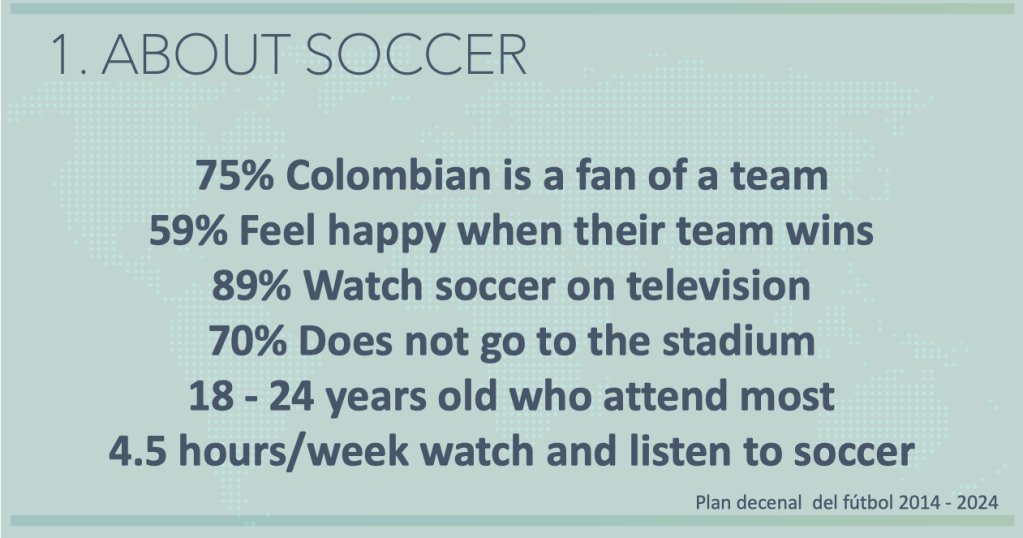
Suppose we contrast the definitions of marketing with what our leaders think. In that case, we begin to see that there are determining conceptual deficiencies in Colombia’s badly called sports marketing. We begin to understand the cause of the crisis. The teams are dedicated to living on basic incomes that confuse with marketing. Let’s now see the reality of soccer in Colombia from the eyes of the fans. Let’s start with the vision of soccer.

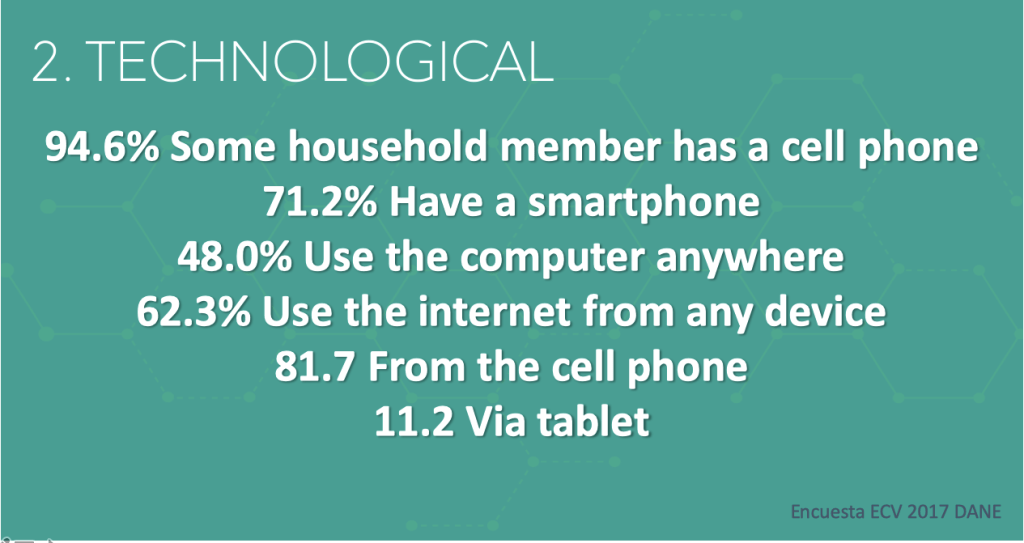
I said at the beginning that these were times of massive technological advances and here we see the current habits of people of all ages about this issue.

Finally, the behavioral aspects of people in Colombia are attached to the above factors and habits, which are decisive when launching innovative sports marketing campaigns.

There is an essential fact in terms of consumption habits: a study shows that a fan is willing to spend 150 dollars per semester without including the cost of going to a match. It means that every year every fan would pay 300 dollars (Dinero.com).

Additionally, to close the current scenario, it is worth calling attention to two possible errors in Colombian soccer marketing. First, Colombia’s few sports marketing initiatives are aimed at 30% of the fans who go to the stadium, and the clubs ignore 70% who do not attend the stadiums and live soccer for TV. Then someone will say that the Premium Channel is a success. Here the second error would appear since the Premium Channel will be broadcast only by cable operators, preventing reaching non-cable subscriber audiences. Consider the following data: 19.3% of young people in Colombia replaced television with an internet subscription. 16.7% of young people watch television by other means. (CRC). If we look at it under the penetration of television formats, we find: cable penetration in Colombia is 85%. (Ibope). The penetration of “TV Everywhere” in Colombia is 90%. (IMS Marketing).

Once the diagnosis of the current situation is made, let’s look at the solutions. To show in a practical way how all the fundamentals mentioned above are applied as an environment of sports marketing, I will say a concrete example for the generation of resources from the technological and with innovation using the new media or social networks. This is my final master’s project done in 2019.

It is a plan that allows a team like @MillosFCoficial to generate 50 million dollars in 3 years with the implementation of a 5-component marketing strategy: • strengthen the passion of the fan, • maintain an emotional relationship with the fan, • customize the transmission of soccer, • loyalty with fans benefits, • run an E-Sports program. The five components only require 200 thousand fans per year, 10 thousand weekly viewers, and an initial investment of 50 thousand dollars. The return on investment would be 100,000%. If we consider that Conmebol quantifies the fans of millionarios.com.co at 9.1 million worldwide or an own investigation that threw 4.8 million fans in Colombia. The goal of generating 50 million dollars in 3 years would only require 2.19% of the fans in the world or 4.10% of the fans in Colombia.

To put these figures in context, let’s see what is equal to the sum. According to the media, Dimayor sold, for ten years, the rights of the international retransmission of Colombian soccer (of the 36 professional teams). With this comparison, we see that Colombian leaders are unaware of the effectiveness of well-done marketing aligned with the framework given by the theoretical, soccer, technological and behavioral elements outlined above.

In conclusion, a marketing plan for a team like millionarios.com.co can generate 50 million dollars in three years, equivalent to the monetary prizes of winning the Copa Libertadores 3 times in a row. We can also conclude that selling the international television rights of the 36 Colombian soccer teams for 50 million dollars for ten years is an undervaluation of the economic power of soccer.

Who wonders if a plan like this was made known to the leaders of @millosFCoficial? The answer is yes and Amber Capital. In both cases, they did not even consider it. They could be understood as the disbelief from ignoring the great marketing possibilities, such as that of the largest club in Colombia.

Soccer teams worldwide are great brands. Numerous people follow them showing feelings, loyalty, and unconditionality, and will not stop because of a defeat in a match or championship. That loyalty is a privilege enjoyed by teams as brands since if they were brands of other types of companies, the dedication of their consumers would be more volatile. During the controversy, Colombian soccer experiencing that income at a professional level does not have to do with greatness as a sport or spectacle but with the innovative way that teams have to meet the emotional needs of their fans. It is not appropriate to compare European leagues with the local ones. Each one is a model of the passions of millions of people who are possible subjects of loyalty. It is a matter of affection or love rather than a business.

It remains the question why is the power of a brand wasted so much or why they are only exploited on game day and left still for the other six days of the week? That only happens in Colombia, and that’s why the crisis deepens. Who wakes up from that lethargy can take the first victorious steps. I have no doubt. To learn more about sports marketing or the elaborated plan I quote in this blog, or if you plan to execute a sports marketing plan, write to me at ottogutierrez@ymail.com, tell me your project or need, and I can surely help you.

LA AUSENCIA DE MERCADEO DEPORTIVO EN EL FÚTBOL COLOMBIANO TIENE EN CRISIS A LA MITAD DE LOS CLUBES EN TIEMPOS EN QUE ES MÁS EFICIENTE GENERAR INGRESOS

Dirigentes “dinosaurios” en un mundo tecnológico masivo están obligados producir ingresos con innovación y se ven incapaces de hacerlo. Las razones: desconocimiento del tema, miedo a la innovación y el vicio de esperar retribuciones personales por ingresos corporativos.

Photo by: Peter Glaser – Unsplash

Por: ottogutierrez@ymail.com

En todas los ámbitos del deporte se habla de mercadeo deportivo con tanta propiedad como si cada persona fuera un experto. Al final de una charla con cualquier dirigente del fútbol colombiano queda claro que el desconocimiento es profundo y marca el inicio de la grave crisis que vive el fútbol profesional en Colombia.

¿Qué es el mercadeo deportivo? Unos creen que es generar recursos por la venta de marcas en la camiseta. Eso es venta de patrocinios. Otros dicen que es cobrar por mensajes comerciales en las vallas alrededor del campo o el estadio. Eso es Ingresos publicitarios. Algunos lo definen como los recursos que llegan por radio y TV. Estos son derechos de transmisión. Otros lo definen como la venta de boletas, abonos y beneficios en el estadio. Esto es entradas y hospitalidad. El mercadeo deportivo es más que todo lo anterior y va mas allá, ya que los ingresos más altos no provienen de los aspectos ya mencionados sino de las otras actividades que pueden  desarrollarse teniendo al hincha como centro o eje.

Empecemos por buscar una definición sencilla pero completa sobre el mercadeo deportivo. Yo me identifico con lo dicho por Alcaide (2013): el mercadeo deportivo es el conjunto de actividades de gestión que tienen como propósito satisfacer las necesidades, deseos y expectativas de los aficionados, fans o hinchas, creando relaciones satisfactorias a largo plazo con ellos y generando beneficios para la empresa.

Podríamos resumir al mercadeo deportivo como una filosofía de negocio que está centrada hacia el hincha con un enfoque hacia el valor y la satisfacción, por lo que, para ello, es esencial que el equipo sea capaz de identificar las necesidades de los mercados objetivo, de diseñar y desarrollar ofertas ajustadas a las mismas y de transmitirlas y acercarlas de forma efectiva hacia su mercado (Monferrer, 2013).

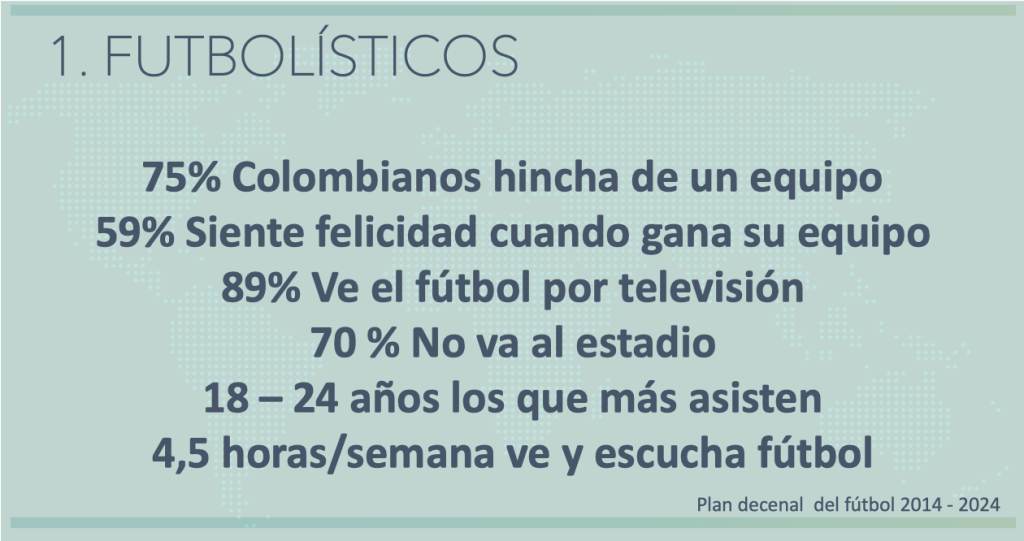
Si contrastamos las definiciones de mercadeo con lo que piensan nuestros dirigentes empezamos a ver que hay deficiencias conceptuales determinantes en el, mal llamado, mercadeo deportivo en Colombia y empezamos a entender la causa de la crisis. Los equipos están dedicados a vivir de unas rentas básicas que confunden con mercadeo. Veamos ahora cuál es la realidad del fútbol en Colombia desde la mirada de los hinchas. Empecemos por la visión desde lo futbolístico.

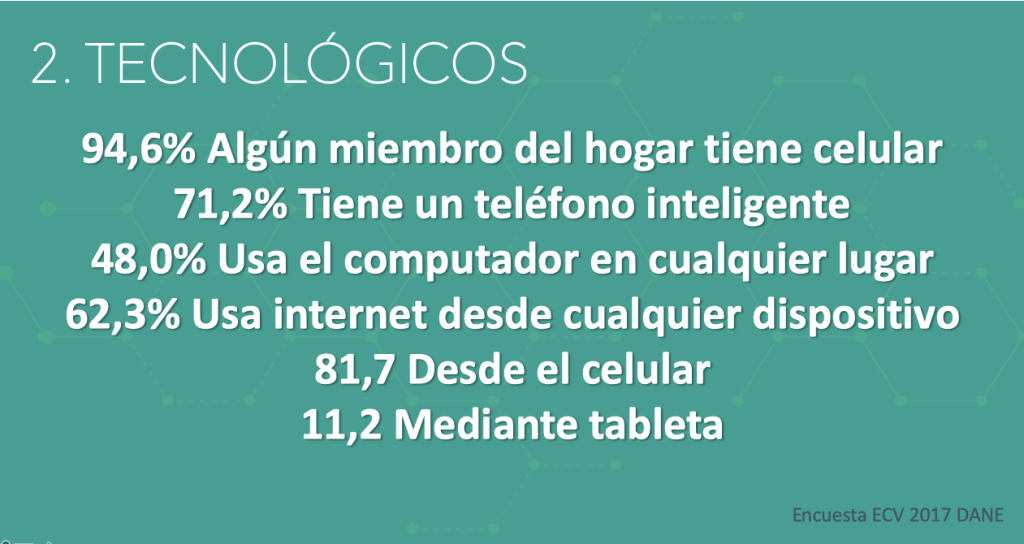
Dije al inicio que eran épocas de avances tecnológicos masivos y aquí vemos los hábitos actuales de las personas de todas las edades en esta materia.

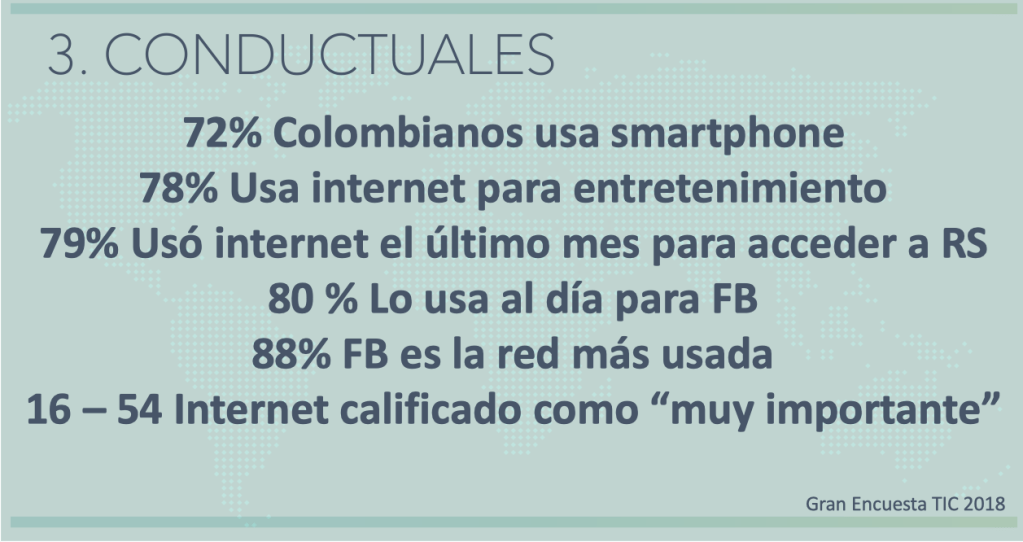
Finalmente, a los factores y hábitos anteriores se unen los aspectos conductuales de las personas en Colombia que son determinantes a la hora de iniciar campañas innovadoras de mercadeo deportivo.

Agreguemos que en cuanto a los hábitos de consumo hay un dato importante: un estudio, muestra que un aficionado está dispuesto a gastar  $150 dólares por semestre sin incluir el costo de ir a un partido. Quiere decir que al año cada aficionado gastaría $300 dólares (Dinero.com).

Adicionalmente, como cierre del panorama actual vale la pena llamar la atención sobre dos posibles errores que ocurren en el mercadeo del fútbol colombiano. Primero, que las pocas iniciativas de mercadeo deportivo que se ven en Colombia van encaminadas al 30% de los aficionados que son los que van al estadio y los clubes dejan de lado al 70% que no asiste a los estadios y que vive el fútbol por televisión. Entonces alguien dirá que el Canal Premium es un acierto. Aquí aparecería el segundo error, ya que el Canal Premium se emitirá solo por cable operadores, lo cual podría impedir alcanzar audiencias no cable suscriptoras. Tengamos en cuenta los siguientes datos: 19,3% jóvenes en Colombia sustituyeron la televisión por suscripción por internet. El 16,7% jóvenes ve televisión por otros medios. (CRC). Si lo observamos bajo la penetración de los formatos de televisión encontramos: la penetración del cable en Colombia es del  85%. (Ibope). La penetración de la “TV Everywhere” en Colombia es del 90%. (Marketing IMS).

Una vez hecho el diagnóstico de la situación actual miremos las soluciones. Para mostrar de manera práctica cómo se aplican todos los fundamentos mencionados anteriormente como entorno del mercadeo deportivo, voy a mencionar un ejemplo concreto para la generación de recursos desde lo tecnológico y con innovación usando los nuevos medios o redes sociales. Se trata de mi trabajo de fin de master realizado en 2019.

Es un plan que le permite a un equipo como @MillosFCoficial generar 50 millones de dólares en 3 años con la implementación de una estrategia de mercadeo de 5 componentes: · potenciar la pasión del hincha, · mantener una relación emocional con el hincha, ·personalizar la transmisión del futbol, ·fidelizar con beneficios a los hinchas, ·ejecutar un programa de E-Sports.  Los 5 componentes solo requieren la participación de 200 mil hinchas por año, 10 mil televidentes semanales y la inversión inicial de 50 mil dólares. El retorno de la inversión sería del 100.000%. Si tenemos en cuenta que los hinchas de millonarios.com.co son cuantificados por la Conmebol en 9,1 millones a nivel mundial o una investigación propia que arrojó 4,8 millones de hinchas en Colombia. La meta de generar 50 millones de dólares en 3 años demandaría tan solo de la participación del 2,19% de los hinchas en el mundo, o del 4,10% de los hinchas en Colombia.

Para colocar estas cifras en contexto miremos que es igual a la suma, en la que según los medios de comunicación, la Dimayor vendió, por el periodo de 10 años, los derechos de la retransmisión internacional del fútbol colombiano (de los 36 equipos profesionales). Con esta comparación vemos que los dirigentes colombianos desconocen la  efectividad del mercadeo bien hecho alineado al marco que dan los elementos teóricos, futbolísticos, tecnológicos y conductuales planteados anteriormente.

En conclusión, un plan de mercadeo para un equipo como millonarios.com.co puede generar 50 millones de dólares en tres años, lo cual equivale a los premios monetarios de ganar 3 veces seguidas la Copa Libertadores. También podemos concluir que vender los derechos de televisión internacionales de los 36 equipos del fútbol colombiano por 50 millones de dólares por un periodo de 10 años es una subvaloración del poder económico del fútbol.

Para quienes se pregunten si ¿un plan como este fue puesto en conocimiento de las directivas de @millosFCoficial?, la respuesta es sí, como también de Amber Capital. En ambos casos ni siquiera lo consideraron y podría entenderse como la incredulidad que produce ignorar las grandes posibilidades de mercadeo de una marca como lo es la del club más grande de Colombia.

Para terminar digamos que los equipos de fútbol en todo el mundo son grandes marcas con numerosas personas que los siguen con emocionalidad, lealtad e incondicionalidad y que no dejarán de hacerlo por una derrota en un partido o un campeonato. Esa fidelidad es un privilegio del que gozan los equipos como marcas, ya que si fueran marcas de otro tipo de empresas,  la lealtad de sus consumidores sería más volátil. También hay que decir en medio de la polémica que vive el fútbol colombiano, que los ingresos a nivel profesional no tienen que ver con la grandeza como deporte o espectáculo sino con la novedosa e innovadora manera que tengan los equipos de satisfacer las necesidades emocionales de sus hinchas. No es apropiado comparar ligas europeas con la local. Cada una es un modelo de pasiones de millones de personas que son posibles sujetos de fidelización. Es un tema de afecto o amor más que negocio.

Entonces la pregunta que cabe es ¿ por qué se desaprovecha tanto el poder de una marca  o por qué solo se explotan durante el día de partido y se dejan quieta durante los otros seis días de la semana? Eso solo ocurre en Colombia y por eso la crisis se profundiza. Quien despierte de ese letargo podrá dar los primeros pasos victoriosos. No tengo duda. Para conocer más de mercadeo deportivo o del plan elaborado el cual cito en este blog o si está pensando ejecutar un plan de mercadeo deportivo simplemente escríbame a ottogutierrez@ymail.com, cuénteme su proyecto o necesidad y seguro lo puedo ayudar. 

COMUNICACIÓN Y MERCADEO UNO A UNO SON LA CLAVE EN ESTOS TIEMPOS

Los medios tradicionales ceden terreno frente a los nuevos medios y la gente prefiere expresarse individualmente priorizando sus emociones, algo que no habían tenido antes.

Photo by: Jens Johnsson – Unsplash

Por: ottogutierrez@ymail.com

Un mito urbano en los Estados Unidos dice que en 1899 el jefe de la Oficina de Patentes de los Estados Unidos habría dicho que esa dependencia debería cerrar porque ya todo estaba inventado. De semejante afirmación ha sido responsabilizado el comisionado Charles H Duell quien habría visto que, tras la máquina de escribir, la fotografía, el cine y el automóvil era poco lo que faltaba por patentar.

Un siglo más tarde, en tiempos totalmente diferentes, el mundo empresarial se sorprendía con una declaración al mejor estilo del Comisionado Duell:

Bueno, mucho se ha escrito sobre como el televisor casero va a convertirse en algo parecido a una computadora (y viceversa). Las personas se sentarán frente a esta maravilla electrónica y disfrutarán espectáculos, leerán las noticias, jugarán, interactuarán, computarán, y todo lo que usted diga y mande. Dudo que todo esto llegue a suceder, pero, ¿y si sucediera? ¿Acaso todas esas máquinas maravillosas harán a las personas más inteligentes? (Trout y Rivkin, 1997).

Para el momento en que se publicaban esas palabras, el mundo empezaba a maravillarse con dos cosas, que sin haberse desarrollado mucho, ya les habían cambiado la vida a todos. La primera era el teléfono celular cuya llegada se produjo en 1983 cuando Motorola lanzó su modelo Dynatac 8000x, el cual pesaba casi un kilogramo y tenía autonomía de una hora en conversación y ocho en espera. La compañía había invertido 100 millones de dólares en su desarrollo (Ranchal, 2014). Tres generaciones de teléfonos lo sucederían para llegar a los avances de hoy. La segunda era el internet con sus incipientes herramientas entre las que sobresalía el correo electrónico. Entonces el uso de la red se limitaba a intercambiar mails y a disponer de una biblioteca global con la información más actualizada del planeta. Identificar y localizar una información determinada era una tarea difícil (Delgado, 2018).

Lejos estaría cualquiera de predecir una fusión de esos adelantos y mucho más de imaginarse un desarrollo tecnológico que los juntara en un solo aparato y lo hiciera indispensable para la humanidad dos décadas después. Para comenzar el siglo 21, el boom del internet  demostró que la imaginación de la humanidad parecía no tener límites y rápidamente internet y teléfono celular se unieron para nunca separarse y empezar a darle a la sociedad una descendencia de productos aún más sorprendentes. Con el avance del internet y todo su entorno y el refinamiento estético y tecnológico del celular fue posible hacia el final de la primera década del nuevo siglo empezar a portar en ellos un nuevo producto que fue conocido como las redes sociales.

Cuando parecía que los avances sustancialmente diferentes continuarían, el mundo se dedicó para  disfrutar de las redes sociales como la forma de comunicación más incluyente, independiente, espontánea y con grandes ventajas que poco a poco empezaron a conocerse con cada día de avance tecnológico. Una a una cada red social fue apareciendo y ganando adeptos: LinkedIn en 2003, Facebook en 2004, Twitter en 2006, Instagram en 2010 o Pinterest en 2011 solo por mencionar la más populares y utilizadas en nuestro medio.

Esta interacción con los teléfonos celulares inteligentes desarrollados como una máquina que reunía al menos 20 aparatos en desuso permitió a las personas realizar varias acciones de comunicación al tiempo, como por ejemplo: oír música, contestar un email, tomar una fotografía, publicar contenido en las redes sociales, grabar un audio, charlar, leer las versiones digitales de los medios de comunicación y todo eso mientras hace una llamada.

Esta catarata de acciones sirvió para crear un nuevo ámbito de la comunicación que fue el individual, que se unía al general y al colectivo que habían marcado desde la invención de cada medio tradicional, su interacción con la audiencia. Para el final de la segunda década del nuevo siglo, una persona ya no tiene que ver la televisión, los telediarios, escuchar la radio y sus informativos, esperar el periódico en la mañana para leerlo o aún más ir al cine. Todo eso empezó a ser parte del ámbito individual en el que cada persona con un “smartphone” es empoderada por la tecnología. Empoderamiento que la hace un mundo nuevo y desconocido por conquistar para la comunicación y el mercadeo. Nos encontramos frente a  tecnologías, desarrolladas originalmente para solucionar las necesidades básicas de la comunicación entre militares y científicos, las cuales dieron origen para crear un escenario que se convertiría en el medio de comunicación, cooperación y comercio más grande e importante del mundo que es Internet (Delgado, 2018).

En el mundo del mercadeo, algunos pasos se han dado en el aprovechamiento de entablar una comunicación de doble vía, interactiva, directa y en tiempo real con cada persona a través de los dispositivos portátiles y de la conexión a internet inalámbrica. Una investigación sobre la influencia de los “smartphone” o teléfonos inteligentes muestra que el uso se extiende durante las horas del día y que la tecnología ha mejorado la vida ya que permite comunicarse con otros. También que este tipo de teléfonos han ganado mas terreno por el hecho ser los únicos en permitir el uso de las redes sociales (Flores, Alvarado y Ramos, 2015).

Cada día se descubre que las opciones y posibilidades son mayores y para aprovecharlas como corresponde, la comunicación y el mercadeo están intentando dar pasos para poderlos ejecutar. Un estudio sobre el compromiso de los fanáticos con clubes de fútbol en Facebook mostró que la necesidad de información, empoderamiento y amor a la marca son los principales impulsores del consumo, la contribución y la creación respectivamente, (los tres niveles de involucramiento o compromiso de los hinchas con sus equipos) con lo cual se reveló, además, que la naturaleza interactiva y colaborativa de las redes sociales puede reforzar motivaciones nuevas, especificas y de  carácter más social. Finalmente, el estudio muestra que el principal impulsor del nivel más alto de participación, que es la creación, fue el amor a la marca, con lo cual se ve que los fanáticos desarrollan reacciones únicas con sus equipos favoritos. El mencionado estudio, uno de los pocos en la investigación de las relaciones de los fanáticos y el fútbol a través de las redes sociales, deja sentadas las bases de cómo deben interactuar “on line”  clubes y fanáticos para obtener el mayor beneficio mutuo siempre a partir de una relación uno a uno (Vale y Fernandes, 2018).

Por eso cuando hablamos de targeting, micro targeting o algoritmos, para llegar a esa relación uno a uno, pareciera que estamos entrando en un lenguaje de ciencia ficción y no de mercadeo y ahí está la clave. Las redes sociales son una realidad que nos ofrece muchas oportunidades solo con dos acciones: la primera, contando con la tecnología y teniendo la capacidad de usarla, y la segunda, mostrando el liderazgo para abrirse a una mentalidad digital.

Interpretando estas actitudes se deben crear canales de mercadeo o de comunicación a través de nuevos medios para empresas y organizaciones como un esfuerzo por mostrar que el mundo digital aplicado a estos procesos ofrece tantas posibilidades como la mente y la pasión por una disciplina o práctica lo permitan.

Es indudable que las redes sociales se han transformado en uno de los medios de comunicación más utilizados por millones de personas en todo el planeta, las cuales confluyen en un lugar determinado, es decir un sitio web, para compartir con sus contactos diversidad de información. En ello precisamente radica el objetivo de estas redes interactivas, que permiten mantener el contacto entre usuarios de todo del mundo, más allá de las distancias geográficas que los separen, y justamente estas comunidades se alimentan de los contenidos que vuelcan diariamente las personas que consumen el servicio (Tecnología & informática, 2019).

Dicho esto, toma valor la afirmación sobre la evolución de la conformación de la opinión pública durante la última década  y la cual está más determinada por las técnicas de marketing digital directo, las cuales están desplazando a los medios de comunicación tradicionales como los principales agentes de conformación de la opinión pública (Lesaca, 2017).”Navegar por Internet ya no es tan seductor como el  hecho de participar en una red social” (De Salas, 2009) Con lo cual, “está claro que la tendencia es ir potenciando la personalización. Es la era del marketing UNO a UNO, donde la relevancia de la información es más importante que nunca al poder elegir el usuario la publicidad que recibe” (De Salas, 2009).

En el medio colombiano todo esto parece haberse posicionado en gran volumen: el 97% utiliza internet para comunicarse y el 78% para entretenerse, en el último mes en Colombia el 79% entró a internet para consultar las redes sociales, el 80% accede  a diario y Facebook es la más utilizada por el 88%, los colombianos entre 16 y 54 años definen el  internet como lo más importante de su vida y por último en el 92% de los hogares algún miembro posee un smartphone (Gobierno de Colombia, 2017).

Para terminar, recordemos un estudio que nos deja ver la especificidad del tema, en términos de hábitos y tiempos, en el que se afirma que el horario más efectivo para realizar publicaciones en Facebook es de 1pm a 4pm, haciendo hincapié en las 3pm. Señala también que coincide con el momento en que las personas suelen almorzar y dejan sus puestos de trabajo, acudiendo a sus teléfonos celulares, destacando que los usuarios chequean al menos 4 o 5 veces esa red social. En cuanto a Twitter, el análisis realizado afirma que el momento de mayor tráfico en esta red es de lunes a jueves de 1pm a 3pm y muy poco por la noche. Concluimos, al día de hoy hay mucha tecnología dispuesta y la obligación será utilizarla (Santos, 2017).

Dicho todo anterior, las soluciones efectivas, económicamente razonables, directas y aglutinadoras vienen de la mano de saber utilizar los nuevos medios y todo su potencial. Si en una empresa u oficina de gobierno quien contrata no es sensible a estos cambios deberá entender que debe reinventarse porque los nuevos tiempo lo han sobrepasado. Para conocer mas de mercadeo o comunicación uno a uno simplemente escríbame a ottogutierrez@ymail.com, cuénteme su proyecto o necesidad y seguro puedo ayudar.

ONE-TO-ONE COMMUNICATION AND MARKETING ARE KEY IN THESE TIMES

Traditional media give ground to new media, and people prefer to choose and express themselves individually, prioritizing their emotions, something they had not had before.

Photo by: Jens Johnsson – Unsplash

By: ottogutierrez@ymail.com

An urban myth in the United States says that in 1899, the United States Patent Office head would have said that this dependency should close because everything was invented. Commissioner Charles H Duell has been held responsible for such a statement because there was little left to patent after the typewriter, photography, film, and the car.

A century later, at totally different times, the business world was surprised by a statement in the best style of Commissioner Duell: “Well, much has been written about how the home TV is going to become something like a computer (and vice versa). People will sit in front of this electronic wonder and enjoy shows, read the news, play, interact, compute, and everything you say and send. I doubt that all this will happen, but what if it happened? Will all those wonderful machines make people smarter? (Trout and Rivkin, 1997)”.

By the time these words were published, the world had begun to marvel at two things that had already changed everyone’s life. The first was the cell phone, whose arrival came in 1983 when Motorola launched its Dynatac 8000x model, which weighed almost a kilogram and had an autonomy of one hour in conversation and eight in standby. The company had invested 100 million dollars in its development (Ranchal, 2014). Three generations of phones would succeed in reaching today’s advances. The second was the internet with its nascent tools, among which the email stood out. The limited use of the network to exchanging emails and having a global library with the most up-to-date information on the planet was a difficult task (Delgado, 2018).

Far would be anyone to predict a fusion of these advances and much more to imagine a technological development that would bring them together in a single device and make it indispensable for humanity two decades later. Humanity’s imagination seemed to have no limits beginning the 21st century. The internet boom showed that humanity’s creativity seemed to have no limits. Quickly the internet and cell phone came together to never separate. They begin to give society offspring of even more fantastic products. With the advance of the internet and its surroundings and the aesthetic and technological refinement, it was possible towards the end of the new century’s first decade to begin to carry in them a new product known as social networks.

When it seemed that substantially different advances would continue, the world dedicated itself to enjoy social networks. They are the most inclusive, independent, spontaneous new media. Their significant advantages gradually began to be popular with each day of technological advancement. One by one, each social network was appearing and gaining adherents: LinkedIn in 2003, Facebook in 2004, Twitter in 2006, Instagram in 2010, or Pinterest in 2011, to mention the most popular and used in our environment.

This interaction with intelligent cell phones developed as a machine that brought together at least 20 devices in disuse allowed people to perform several communication actions at the same time, such as: listening to music, answering an email, taking a picture, publishing content on the social networks, record audio, chat, read digital versions of the media and all that while making a call.

This cataract of actions created a new communication field that I describe as the individual, which joined the general and the collective marked since the invention of each traditional medium, their interaction with the audience. By the end of the second decade of the new century, a person no longer has to watch television, news, listen to the radio and its information, wait for the newspaper in the morning to read it, or even go to the movies. All this began to be part of the individual sphere. Each person with a “smartphone” is empowering by technology.
The empowerment makes it a new and unknown world to conquer for communication and marketing. We were faced with technologies initially developed to solve the basic needs of communication between the military and scientists, which gave rise to create a scenario that would become the largest and most important means of communication, cooperation, and commerce in the world that is the Internet (Slim, 2018).

In marketing, they establish two-way, interactive, direct, and real-time communication with each person through portable devices and wireless internet connections. An investigation into the influence of “smartphones” shows that the use is extending during daylight hours. Technology has improved life as it allows communication with others; these types of phones have gained more ground because they are the only ones to allow the use of social networks (Flores, Alvarado, and Ramos, 2015).

Every day it is discovered that the options and possibilities are more significant, and communication and marketing are trying to take advantage of them. A study about fan engagement with football clubs on Facebook showed that the need for information, empowerment, and love for the brand are the main drivers of consumption, contribution, and creation. The three levels of involvement or commitment of fans with their teams revealed that social networks’ interactive and collaborative nature could reinforce new, specific, and more social motivations. Finally, the study shows that the main driver of the highest level of participation, creation, was the brand’s love, which shows that fans develop unique reactions to their favorite teams. The study mentioned above, one of the few in investigating fan relations and football through social networks, lays the foundations of how clubs and fans should interact online to obtain the most significant mutual benefit from a one-to-one relationship (Vale and Fernandes, 2018).

So when we talk about targeting, micro-targeting, or algorithms, to reach that relationship one by one, it seems that we are entering a science fiction language and not marketing, and there is the key. Social networks are a reality that offers us many opportunities with only two actions: the first, with the technology and the ability to use it, and the second, showing the leadership to open up to a digital mindset.

Companies and organizations must create marketing or communication channels through new media to show that the digital world applied to these processes offers as many possibilities as the mind and passion for a discipline or practice permit. “There is no doubt that social networks have become one of the most used media by millions of people across the globe, which converge in a specific place, that is to say, a website, to share with their contacts a diversity of information. The objective of these interactive networks, which allow maintaining contact between users from all over the world beyond the geographical distances that separate them, and precisely these communities feed on the content that people who consume service (Technology & computing”, 2019).

It is good to affirm the evolution of public opinion’s conformation during the last decade, which is more determined by direct digital marketing techniques, which are displacing traditional media as the primary agents of the creation of public opinion (Lesaca, 2017).” Another author said, “Browsing the Internet is no longer as seductive as the fact of participating in a social network” (De Salas, 2009). With which, “it is clear that the trend is to strengthen the personalization. It is the era of marketing ONE to ONE, where the relevance of information is more important than ever to be able to choose the user the advertising it receives” (De Salas, 2009).

In the Colombian environment, all this seems to have positioned itself in large volume: 97% use the internet to communicate and 78% to entertain themselves; in the last month in Colombia, 79% entered the internet to consult social networks, 80% accessed daily and Facebook is the most used by 88%, Colombians between 16 and 54 years define the internet as the most crucial thing in their life, and finally in 92% of homes some member has a smartphone (Government of Colombia, 2017).

Finally, remember a study that lets us see the specificity of the topic in terms of habits and times, which states that the most effective time to publish on Facebook is from 1 pm to 4 pm, emphasizing 3 pm. He also points out that it coincides with the moment when people usually have lunch and leave their jobs, going to their cell phones, noting that users check that social network at least 4 or 5 times. As for Twitter, the analysis carried out states that the moment of most incredible traffic on this network is from Monday to Thursday from 1 pm to 3 pm and very little at night. Today, we conclude much willing technology and its obligation to use it (Santos, 2017).

Having said all the above about one-to-one communication with equal segmentation, we can say that practical, economically reasonable, direct, and inclusive solutions arrive if we know how to use the new media and their full potential. If the person who hires is not sensitive to these changes in a company or government office, he must understand that he must reinvent himself because the new times have completely surpassed him. To learn more about marketing or one-to-one communication, write to me at ottogutierrez@ymail.com and tell me about your project or need and I can surely help.
THE CHALLENGE IS TO GO FROM THE PRESS IN CAMPAIGN TO THE COMMUNICATION OF GOVERNMENT WITH EFFICIENCY AND SECURITY

Many communication teams fail in the transition of the communications operation and make the first big mistake that is often irreversible.

Photo by: Austin Distel – Unsplash

By: ottogutierrez@ymail.com

The first challenge facing the communications team of ​​a candidate who won the election is to understand and land the model and the operation of communications in the field of action of his new job. Although winning the victory is the most significant possible result, the new position or administration would not exist without it; coming is even more critical. Starting because this will be a task with years and not weeks or months as the campaign was. The new objective is to move weighty and, simultaneously, very delicate machinery that day by day due to the hard work will suffer fatigue, breakdowns, and damage during difficulties and crises. It is not a fatalistic vision but a reality that only those who have experienced it understand. Campaign and office communication have their dynamics. If we know them, we can successfully apply the conversion and achieve more remarkable achievements.

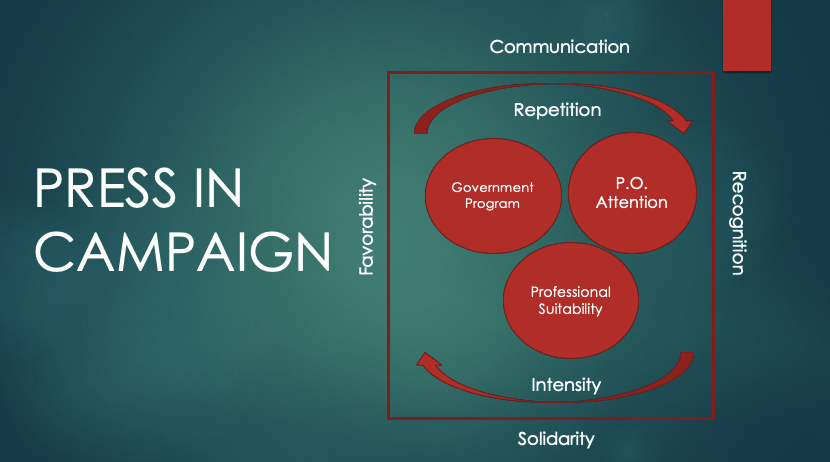
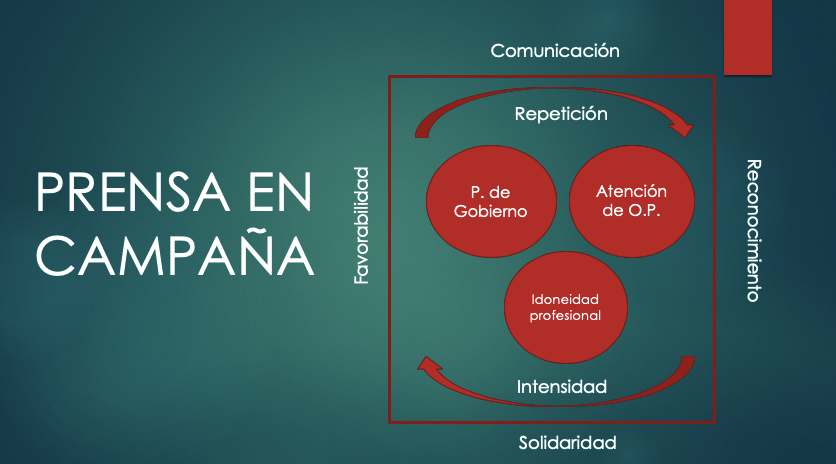
The campaign’s communication work determines by disseminating three elements: the government plan, gaining public opinion, and showing suitability for the position. These elements seem to be framed by four challenges: communication, recognition, favorability, and solidarity behind which will be the public, citizens, supporters, or casual voters as they want to see but who ultimately will say which candidate met the highest percentage around his name. All these elements interact with two multiplying factors that are intensity and repetition. Mixing all in the right proportions will result in victory over his opponents.

In other words, the candidate who best shows his government plan better captures public attention and offers the most outstanding suitability for the position will have known how to communicate, will receive recognition. He will obtain the favorability and solidarity of the electors, using the intensity and repetition of their messages. There are usually excellent candidates in the elections who fail to balance these elements, challenges, and factors and lose to the public’s surprise that gave them as chosen insurance. Some candidates cannot understand this dynamic and lose out loud no matter how hard they try.

Someone will say that political complements such as support, parties, and political leaders accompanying each candidate should also be significant. The answer is if, to the extent that they help enhance the three elements, they boost the challenges and extend the radius of action of the factors. If not, we would say they bring more harm than benefit, so it is not positive. Those political supports, in some way, will intervene in the equation for their dynamic reason. Let’s look at the dynamics expressed in the following figure.

Let’s go back to campaign communication. The candidate and the communications team that best did the job combining these elements, challenges, and factors were the winners. They should then evaluate to review what was well and what is not. This evaluation cannot be more than that because building government communication will begin with a different plan and fundamentals. Here is the first big mistake: to believe that what was successful in the campaign will be in the administration of the position and is not so.

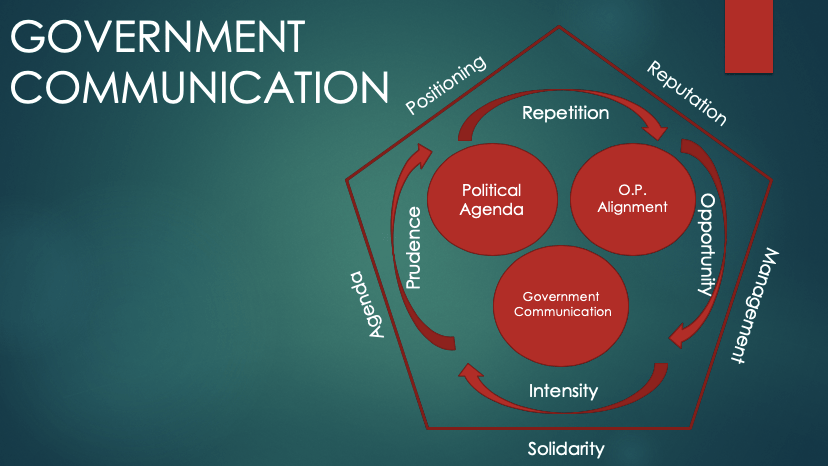
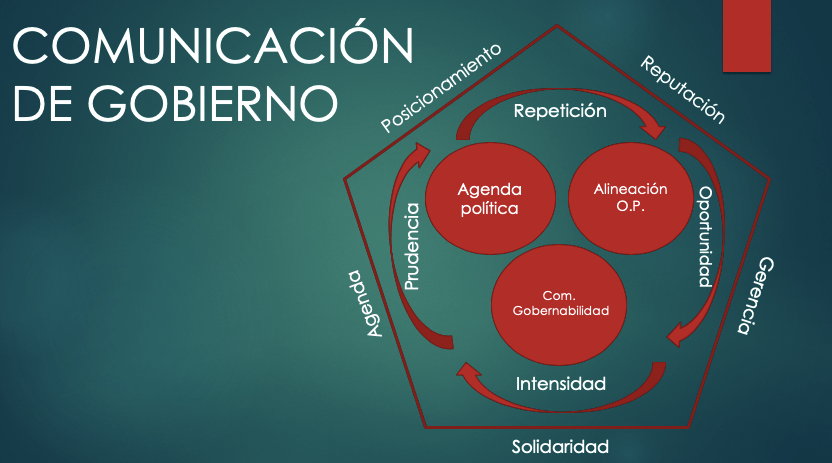
The elements, challenges, and factors will also appear in the administration of a position or the government communication. Still, they are distributing differently and with other objectives and another sense to that of the campaign. The new elements will also be three: socialization of the political agenda, alignment with public opinion, and governance communication. The challenges will be five: positioning, reputation, plan, management, and solidarity, all known as the PRAMS model I developed and implemented over several years of exercise. The factors that will multiply this whole formula will be four: repetition, prudence, inclusion, and opportunity. Around the entire execution will be citizens, as the classification of supporters or voters disappears. Let’s look at the dynamics in the following figure.

Seeing each of the communications operation models for the campaign and the government allows us to know the difference: first, in terms of simplicity of one face the other and second, the complexity of running the government regarding the campaign. Implementing the government’s communication program will be a delicate task, which will require strategic strength, a variety of tactical actions, and, above all, precision in detail. The achievement of the PRAMS model’s challenges will allow the historical recognition of efficiency and effectiveness with which every official wishes to remember but above all the tranquility and confidence with which each citizen wants to see their vote rewarded and remember their rulers. To learn more about marketing or government communication against the one executed in the campaign, write to me at ottogutierrez@ymail.com, tell me the project or need, and I can surely help.
EL RETO ES PASAR DE LA PRENSA EN CAMPAÑA A LA COMUNICACIÓN DE GOBIERNO CON EFICIENCIA Y SEGURIDAD

Un alto número de equipos de comunicación fallan en la transición de la operación de comunicaciones y cometen el primer gran error que muchas veces es irreversible.

Photo by: Austin Distel – Unsplash

By:ottogutierrez@ymail.com

El primer reto que enfrenta el área de comunicaciones de un candidato que logró ganar la elección es poder entender y aterrizar el modelo y la operación de comunicaciones en el campo de acción de su nuevo trabajo. Si bien, haber obtenido la victoria es el más grande resultado posible, ya que sin ella no existiría la nueva posición o administración, lo que viene es aún más importante. Empezando porque será una tarea con una duración de años y no de semanas o meses como lo fuera la campaña. El nuevo objetivo es mover una maquinaria muy pesada y a la vez muy delicada que día a día, por el duro trabajo, sufrirá fatiga, averías y daños en medio de las dificultades y las crisis. No se trata de un pronóstico fatalista sino de una realidad que solo se entiende cuando se experimenta. La comunicación de campaña y la del cargo tienen sus propias dinámicas. Si las entendemos podremos aplicar con éxito la conversión y alcanzar mayores logros.

El trabajo de comunicación en la campaña  está determinado por la ejecución de la divulgación de tres elementos que son: el plan de gobierno, ganar la atención de la opinión publica y mostrar idoneidad para el cargo. Estos elementos parecieran estar  enmarcados por cuatro retos que son la comunicación, el reconocimiento, la favorabilidad y la solidaridad tras de los cuales estarán el público, los ciudadanos, partidarios o los votantes casuales como se quieran ver pero quienes en definitiva dirán cual candidato reunió el mayor porcentaje en torno a su nombre. Todos estos elementos interactúan con dos factores multiplicadores que son la intensidad y la repetición. Al mezclarse todos en la proporcion adecuada dará como resultado la victoria sobre sus oponentes.

Dicho de otro modo, el candidato que mejor sepa mostrar su plan de gobierno, capte de mejor forma la atención pública y muestre la mayor idoneidad para el cargo habrá sabido comunicarse, recibirá el reconocimiento, obtendrá la favorabilidad y la solidaridad de los electores, habiendo hecho uso de la intensidad y la repetición de sus mensajes. En las elecciones suele haber candidatos muy buenos que no logran balancear estos elementos, retos y factores y pierden ante la sorpresa del público que los daba como seguros elegidos. También hay candidatos, que por más que lo intentan, no logran entender esta dinámica y pierden estruendosamente.

Alguien dirá que además deben ser  considerados como importantes los complementos políticos tales como apoyos, los partidos y líderes políticos que acompañan a cada candidato. La respuesta es si, en la medida en que contribuyan a potenciar los tres elementos, sirvan para impulsar los retos y ampliar el radio de acción de los factores. Si no es así diríamos que aportan más daño que beneficio y por eso deben ser considerados cuidadosamente. Esos apoyos de alguna manera intervendrán en la ecuación por su dinámica propia, razón por la que deben ser cuidados permanentemente. Veamos la dinámica expresada en la siguiente figura.

Volvamos a la divulgación de campaña. El candidato y el equipo de comunicaciones que mejor hicieron el trabajo combinando estos elementos, retos y factores fueron los ganadores. Deberán, entonces, hacer una evaluación para revisar qué se hizo bien y qué no. Dicha evaluación no puede ser más que eso porque el proceso de construcción de la comunicación de gobierno comenzará en ese momento con un plan y fundamentos distintos. Aquí ocurre el primer gran error que es creer que lo que fue exitoso en la campaña, tal cual lo será en la administración del cargo y no es así.

En la administración de un cargo o en la comunicación de gobierno también aparecerán los elementos, retos y factores descritos anteriormente pero se distribuirán de distinta manera y con objetivos diferentes así como con otro sentido al de la campaña. Los nuevos elementos también serán tres: socialización de la agenda política, alineación con la opinión pública y comunicación de gobernabilidad. Los retos serán cinco: posicionamiento, reputación, agenda, gerencia y solidaridad, todos ellos conocidos como el modelo PRAGS que he desarrollado e implementado a lo largo de varios años de ejercicio. Los factores que multiplicarán toda esta fórmula serán cuatro: repetición, prudencia, inclusión y oportunidad. Alrededor de toda la ejecución estarán los ciudadanos, ya que desaparece la clasificación de partidarios o votantes. Veamos la dinámica en la siguiente figura.

El resultado de observar, desde nuestro punto de vista, cada uno de los modelos de operación de comunicaciones para la campaña y para el gobierno nos permite claramente ver la diferencia: primero, en términos de sencillez de una frente la otra y segundo la complejidad de ejecutar la de gobierno con respecto a la campaña.  La implementación del programa de comunicación en el gobierno será una tarea delicada, que requerirá fortaleza estratégica, variedad de acciones tácticas y sobre todo precisión en los detalles. La consecución de los retos del modelo PRAGS permitirá el reconocimiento histórico de eficiencia y eficacia con el que todo funcionario desea ser recordado pero sobretodo la tranquilidad y confianza con la que cada ciudadano quiere ver recompensado su voto y así recordar a sus gobernantes. Para conocer más de mercadeo o comunicación de gobierno frente a la ejecutada en campaña simplemente escríbame a ottogutierrez@ymail.com, cuénteme su proyecto o necesidad y seguro puedo ayudar.